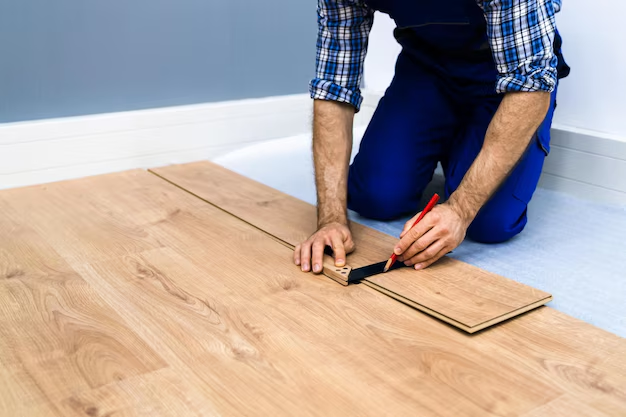
Flooring in Home Improvement: An Everyday Guide to Big, Lasting Decisions
Flooring sounds simple: it is the surface you walk on. In home improvement, though, flooring is its own world of materials, layers, methods, and trade‑offs. It shapes how a space looks, feels, sounds, and holds up over time.
This guide walks through flooring as a sub-category of home improvement: where it begins and ends, how different choices work, and which factors usually matter most. It is meant as a map, not a set of instructions. The “right” floor depends heavily on your home, climate, budget, body, and long‑term plans.
What “Flooring” Covers in Home Improvement
Within home improvement, flooring usually means:
- The visible surface you walk on (wood, tile, carpet, vinyl, etc.)
- The layers directly under it that affect stability, warmth, sound, and moisture resistance
- The methods used to attach or float that surface over the subfloor
- The transitions and trims (thresholds, stair noses, baseboards, etc.) that finish the job
It does not usually include:
- Structural floor framing (joists, beams) — that is more “structural” or “framing”
- Major foundation work (slabs, piers)
- Full interior design (furniture, decor)
Why this distinction matters:
- Flooring sits between structure and decor. It has to work mechanically (support loads, handle moisture) and aesthetically (color, texture, style).
- Changing flooring often affects multiple systems at once: doors and trim, heating and cooling behavior, sound between rooms, even safety and accessibility.
- Mistakes can be costly to fix because flooring is usually continuous and hard to access without tearing it out.
So when people talk about “doing the floors,” they are often dealing with a complex set of choices involving materials, subfloors, installation methods, maintenance needs, and environmental factors, all at once.
Core Flooring Concepts: How It Works Beneath Your Feet
To understand flooring decisions, it helps to know a few core ideas that experts rely on.
The Flooring “Stack”: Surface, Underlayment, Subfloor
Most floors are a stack of layers:
Subfloor
The structural layer your flooring sits on, usually plywood, OSB (oriented strand board), or concrete slab. It carries loads and ties into the building structure.Underlayment (or pad)
A thin layer between subfloor and finished flooring. It can:- Smooth small imperfections
- Add cushioning
- Reduce sound
- Provide moisture or vapor control (in some systems)
Flooring surface (finish layer)
The material you see and touch: hardwood, laminate, vinyl, tile, carpet, cork, etc.
The interaction of these layers affects:
- How the floor feels underfoot (soft, springy, firm, cold, warm)
- How it sounds (echoing, quiet, “hollow”)
- How it handles moisture, spills, and temperature changes
- How long it tends to last before needing major work
Research in building science and materials engineering shows that layering choices (especially moisture control and stiffness) play a large role in durability and comfort. These findings come mostly from laboratory testing, field studies of building failures, and professional consensus, rather than controlled trials, because homes vary widely.
Ways Flooring Attaches: Glue, Nails, Click, Float
Most finished floors are:
- Nailed or stapled to the subfloor (common with solid hardwood, some engineered products)
- Glued down (common with vinyl, some engineered wood, some carpets, some tiles)
- Floated — clicked or locked together, sitting on top of the underlayment without bonding to the subfloor
At a general level:
Nailed/stapled:
- Often feels solid and permanent
- Can be harder to remove or alter later
- Depends on subfloor quality for stability
Glued down:
- Can provide a firm feel
- Adhesive choice matters for moisture, chemicals, and longevity
- Removal can be labor‑intensive
Floating:
- Usually easier and faster to install or replace
- Can allow more movement with temperature and humidity
- Underlayment plays a bigger role in feel and sound
There is no universal “best” method. Performance depends on material type, subfloor, environment, and how carefully the system is designed and installed.
Hard vs. Soft, Resilient vs. Rigid Surfaces
Flooring materials are often grouped by how they respond to pressure:
- Hard, rigid: ceramic tile, stone, some porcelain tiles
- Hard but slightly resilient: hardwood, bamboo, cork, some luxury vinyl
- Soft/resilient: carpet with padding, rubber, some specialty vinyls
Research on biomechanics and ergonomics indicates that very hard, unforgiving surfaces can increase perceived fatigue and impact forces on joints when people stand or walk on them for long periods, while slightly resilient surfaces may feel easier on the body. Much of this evidence comes from workplace studies (factories, healthcare settings) rather than typical homes, so direct application to residential living has limits. Still, many people report differences in comfort based on surface hardness and cushioning.
Moisture and Temperature: Why Climate Matters
Flooring needs to cope with:
- Liquid water (spills, leaks, wet mopping, bathroom overspray)
- Water vapor (moisture moving through slabs or crawlspaces)
- Humidity and temperature swings (seasonal changes, heating and cooling)
Common patterns seen in building science and failure investigations:
- Wood‑based products (solid hardwood, engineered wood, some laminates, bamboo) are sensitive to moisture and humidity, tending to expand, contract, and sometimes cup or warp with changes.
- Many ceramic and stone tiles handle surface moisture well but can fail if the substructure moves or flexes.
- Many vinyl and some composites show better resistance to surface moisture, but water trapped underneath can still cause problems with adhesives, subfloors, or mold.
These conclusions are based largely on field reports, standardized material testing, and expert consensus. Exact behavior varies by product formulation and installation details.
The Main Types of Residential Flooring
Most residential flooring falls into a handful of broad categories. Each comes with its own mix of look, feel, durability, maintenance, and typical uses.
Wood and Wood-Look Floors
Solid hardwood and engineered wood are common in living areas, bedrooms, and hallways.
- Solid hardwood is milled from a single piece of wood.
- Engineered wood has a real wood surface bonded to lower layers (often plywood or fiberboard).
General patterns:
- Many people value wood for its natural appearance and the way it can be refinished multiple times (especially solid hardwood).
- Wood floors tend to be sensitive to moisture and humidity; professional standards often specify careful acclimation and moisture control.
- Engineered wood generally handles humidity changes better than solid wood, though construction quality varies.
Wood-look floors — such as laminate and some vinyl planks — try to mimic wood appearance:
- Laminate generally has a printed design layer and a core made from fiberboard.
- Luxury vinyl plank (LVP) and luxury vinyl tile (LVT) use synthetic layers, often with a photographic image and wear layer on top.
Studies of flooring durability in real homes are limited and often observational, but lab abrasion tests and manufacturer performance testing suggest that better-quality laminates and vinyls can be highly resistant to surface wear. They may not, however, have the same repair or refinishing options as real wood.
Tile and Stone
Ceramic tile, porcelain tile, and natural stone are widely used in bathrooms, kitchens, and entryways.
Common characteristics:
- Hard, dense surfaces that resist scratches and surface moisture
- Joints filled with grout, which can be more prone to staining or cracking
- Cold feel underfoot in many climates (sometimes offset by radiant floor heating)
Failures seen in building reports often involve:
- Movement of the subfloor causing cracks
- Improper waterproofing in wet areas (showers, around tubs)
- Unstable substrates (for example, tiling directly over flexible or damp surfaces)
Tile and stone can last a long time when installed with appropriate underlayment, thinset, and movement joints, but installation quality and the underlying structure are key variables.
Vinyl and Other Resilient Flooring
Resilient flooring is a category that includes:
- Sheet vinyl
- Luxury vinyl plank (LVP) / luxury vinyl tile (LVT)
- Linoleum (a natural material, distinct from modern PVC-based vinyl)
- Rubber flooring in some specialty areas
General observations:
- These floors often handle surface moisture better than wood-based options and can be easier to wipe clean.
- Their feel ranges from quite firm to comfortably cushioned, depending on thickness and backing.
- Some types can dent under point loads (for example, heavy furniture with small feet).
In recent years, researchers and regulators have paid more attention to flooring materials’ chemical emissions (VOCs) and indoor air quality. Studies and testing programs have found that emissions can vary by material type and manufacturer. Over time, many products have moved toward lower‑emission formulations, but testing standards and labeling still differ. Evidence about long‑term health effects at real‑world exposure levels is mixed and evolving, and much of the available information is based on lab testing rather than long‑term population studies.
Carpet and Rugs
Carpet and area rugs create softer, quieter floors.
Carpet systems generally include:
- A pile (the visible fiber)
- A backing
- An optional cushion or pad underneath
Research tends to show some consistent patterns:
- Carpet generally reduces noise and echo more than most hard surfaces.
- It can trap dust and particles within the fibers, which can later be removed by vacuuming. Whether this is helpful or harmful depends on how often and how thoroughly it is cleaned, and on individual sensitivities.
- Some studies have looked at carpet and asthma or allergy symptoms, but findings are not uniform. Outcomes may depend on fiber type, cleaning habits, indoor humidity, and other factors. Much of the evidence is observational, not controlled trials.
Carpet also raises questions about chemical emissions, especially with certain backings and adhesives. As with vinyl, testing standards and product formulations have shifted over time.
Other Materials: Cork, Bamboo, Concrete, and More
Less common but notable residential flooring options include:
- Cork: soft, resilient, and quieter underfoot. Sensitive to moisture and fading; maintenance and sealing are key.
- Bamboo: often marketed as a type of wood; technically a grass. Performance varies widely by construction method and adhesive type.
- Polished or stained concrete: typically used where there is an existing slab, often in modern or industrial-style spaces. Very hard and can feel cold; can be highly durable when properly finished.
- Rubber and specialty floors: seen in home gyms, playrooms, or workshops; chosen for grip, cushioning, and impact resistance.
Each of these has specific installation needs and maintenance patterns; studies tend to be more limited and product-specific.
Key Variables That Shape Flooring Outcomes
Flooring choices are highly dependent on context. Research and building practice point to some recurring variables that shape what tends to work, wear, and feel best.
1. Room Function and Use
How a space is used changes what matters most:
- Kitchens and entryways: higher risk of spills, dirt, and heavy traffic
- Bathrooms and laundry areas: more exposure to water and humidity
- Bedrooms and living rooms: more focus on comfort, warmth, and noise
- Stairs: need good traction and safe transitions
Studies of home injuries and falls highlight that slippery surfaces, poor lighting, and sudden changes in floor height can contribute to accidents. However, flooring is only one factor among many (health status, footwear, clutter, etc.).
2. Climate, Humidity, and Building Type
Flooring behaves differently in:
- Humid vs. dry climates
- Basements vs. upper floors
- Homes over crawlspaces vs. homes on slabs
For example:
- Wood-based floors often show more movement in climates with big seasonal humidity swings.
- Basements and slabs can have moisture moving through the concrete, which might affect adhesives, wood-based products, or cause mold if not handled correctly.
Building scientists often emphasize moisture management because many flooring failures trace back to unexpected water or humidity levels, based on field surveys and forensic inspections rather than randomized trials.
3. Subfloor Condition and Structure
The subfloor (and what lies below it) affects:
- How “solid” the floor feels
- Whether tile will crack or grout will fail
- How much the floor flexes or squeaks
Professional standards typically call for subfloors to meet certain flatness and stiffness requirements for each flooring type. For example, tile generally needs a stiffer base than carpet. These standards come from engineering calculations, industry testing, and accumulated field experience.
4. Comfort, Health, and Accessibility
Individual health and mobility can change what counts as a “good” floor:
- People with joint pain may prefer softer, more forgiving surfaces, though preferences vary.
- Some assistive devices (walkers, wheelchairs) move more easily on firm, smooth surfaces and can be harder to maneuver on thick carpet.
- Falls on hard surfaces may result in more impactful landings than falls on carpet, but carpet can also create trip hazards if it bunches or has loose edges.
Research on flooring and falls, especially in older adults, is ongoing. Studies in care facilities suggest that flooring type and underlayment can influence fall injuries, but the evidence is complex and influenced by many environmental and personal factors.
5. Air Quality, Sensitivities, and Cleaning Habits
Flooring can interact with indoor air and dust in several ways:
- VOCs and other emissions: some materials and adhesives emit volatile organic compounds, especially when new. Laboratory tests measure these emissions, but how they translate into long-term health effects in varied home settings is less clear.
- Dust and allergens: hard surfaces make dust more visible and easier to wipe away, while carpet traps particles until vacuumed. Studies show mixed results about which is better for respiratory symptoms, and cleaning habits appear to play a major role.
- Moisture + dust: damp environments and accumulated dust can support dust mites and mold, regardless of floor type.
Individual sensitivities vary widely, so the same floor can feel fine to one person and problematic to another.
6. Upfront Budget, Total Cost Over Time, and DIY Skills
Flooring costs are not just about the price per square foot of the material:
- Preparation costs: fixing subfloors, leveling, moisture mitigation
- Installation labor: varies by material and local rates
- Tools and learning curve: some floors are more DIY‑friendly; others are more complex
- Maintenance and replacement: refinishing wood, replacing carpet, resealing tile grout
Economic analyses of home improvements suggest that durability, maintenance needs, and resale appeal can have as much impact on long-term value as initial cost. These analyses are often based on market data and surveys, not controlled experiments, so they offer general tendencies rather than guarantees.
Different Home Profiles, Different Flooring Trade-Offs
Because circumstances differ, the same flooring choice can lead to very different experiences. Here are some examples of how context reshapes the decision.
A Busy Household with Kids and Pets
In many such homes:
- Scratch resistance and stain resistance become priorities.
- Comfort for crawling children and play areas may matter more.
- Spills, accidents, and frequent cleaning are common.
Some families in this situation focus on durable, easy-to-clean surfaces in high‑use areas and may accept more frequent replacement or visible wear in exchange for lower cost or softer feel. Others prioritize noise reduction, especially in multi‑level homes. What feels “worth it” depends on how the household weighs mess, maintenance, noise, and comfort.
An Older Adult Planning to Age in Place
For someone planning to stay in their home as they age, concerns often shift toward:
- Slip resistance, especially in bathrooms and on stairs
- Trip hazards: thresholds, thick rugs, loose edges
- Ease of using mobility devices on the surface
- Glare and visibility of edges and transitions
Research on fall prevention highlights the role of environmental design, including flooring, but also notes that falls usually arise from a combination of personal health, medication effects, footwear, lighting, and floor conditions. Flooring changes can be helpful or disruptive, depending on timing and individual needs.
A Basement Remodel in a Damp Climate
Basements often involve:
- Potential moisture from walls or slab
- Cooler temperatures
- Limited natural light
Here, decisions around vapor barriers, raised subfloors, or moisture‑tolerant materials can be as important as the visible surface. Building science research shows that trapping moisture in the wrong place (for example, under organic materials) can encourage mold growth, but optimal solutions differ by climate, foundation type, and existing conditions.
A Design-Focused Renovation for Resale
When resale value is a major goal, homeowners sometimes:
- Pay closer attention to local buyer preferences
- Consider which flooring choices are most expected in that market segment (for example, hardwood vs. carpet in living spaces)
- Weigh the immediate visual impact against materials’ long-term performance
Real estate data suggests certain materials tend to be associated with higher sale prices or faster sales in some markets, but these effects vary by region, price range, and trends over time. Flooring is just one of many features buyers consider.
The Main Subtopics Within Flooring: Where Readers Go Next
Once you understand the broad landscape, flooring questions usually narrow into a few recurring areas. Each of these is substantial enough to warrant its own detailed articles and research.
1. Choosing Flooring by Room and Use
Many people start with “What flooring is best for my [room]?” Different rooms pose different challenges:
- Kitchens and dining rooms with frequent spills and heavy use
- Bathrooms with standing water and humidity
- Living rooms and bedrooms where comfort and style may matter more
- Entryways and mudrooms that carry dirt and moisture into the house
Within this subtopic, readers often explore:
- Water and moisture tolerance by room
- Noise and comfort needs (upstairs vs. downstairs, shared walls)
- How continuous flooring vs. room-by-room changes affect feel and maintenance
2. Flooring and Subfloor/Structure Basics
Another cluster of questions revolves around subfloors and what lies beneath:
- What is my current subfloor made of, and what condition is it in?
- Do I need leveling, new underlayment, or structural fixes before installing a new floor?
- How does flooring choice interact with radiant heat or insulation?
This is where building science, structural engineering, and flooring materials meet. Articles in this area often break down:
- How to understand and evaluate existing subfloors
- When extra preparation is typically considered
- How different flooring systems distribute loads and handle movement
3. Installation Methods and DIY vs. Professional Work
Readers often ask:
- Which flooring types are more approachable for DIY?
- How do floating, nailed, or glued systems differ in practice?
- What mistakes tend to cause problems down the line?
Evidence here is mainly practical and experience-based. It covers:
- Typical tool and skill requirements
- Common installation errors reported by professionals and inspectors
- How warranties and manufacturer guidelines interact with installation methods
4. Durability, Maintenance, and Lifespan
Another core theme is how floors age:
- What tends to scratch, dent, or fade?
- How often will this need refinishing, resealing, or deep cleaning?
- What kinds of damage can be repaired vs. requiring full replacement?
Available research includes:
- Standardized abrasion, impact, and stain resistance tests
- Field observations by contractors and inspectors
- Consumer surveys about satisfaction and perceived durability
This subtopic also touches on cleaning methods and products, where over‑aggressive cleaning can sometimes harm finishes or shorten lifespan.
5. Flooring, Health, and Indoor Environment
Questions in this area include:
- How do different flooring materials affect indoor air quality?
- What do we know about flooring and allergies, asthma, or chemical sensitivities?
- Are some materials or practices more common in low‑emission or “healthy home” approaches?
Evidence comes from:
- Lab tests of VOC emissions
- Epidemiological and observational studies about flooring and respiratory symptoms
- Expert panels and guideline documents on indoor environments
Findings are often nuanced and sometimes mixed, reflecting differences in housing, climate, and cleaning habits, as well as the evolving chemistry of flooring products over time.
6. Safety, Accessibility, and Aging Considerations
Some readers focus on:
- Slip resistance in wet areas
- Transitions between surfaces (height differences, thresholds)
- Flooring choices that work well with mobility aids
Research, particularly in healthcare and senior housing settings, examines:
- Relations between floor type and slips, trips, and falls
- How underlayment and material softness affect impact forces during falls
- Trade-offs between cushioning (for impact) and stability (for balance)
These findings can inform general thinking but often need adaptation for individual homes.
7. Sustainability and Environmental Impact
Finally, more people are asking:
- How resource‑intensive is this flooring material?
- What about its full life cycle — production, transport, use, and disposal?
- Can it be refinished, repaired, or recycled?
Studies in this area use life cycle assessment (LCA) and environmental impact metrics. Results can vary by:
- Source of raw materials
- Manufacturing processes
- Distance traveled
- Expected lifespan and maintenance
Because LCAs are complex and assumptions differ, comparisons between products should be interpreted as general direction rather than precise rankings.
Bringing It Together: Flooring as a Long-Term System, Not Just a Surface
Flooring in home improvement is more than picking a color or style. It involves:
- Understanding the layers (subfloor, underlayment, surface) and how they interact
- Recognizing material types and their typical strengths and limitations
- Considering room function, climate, structure, health, and accessibility
- Looking beyond initial price to installation, maintenance, and lifespan
- Weighing comfort, safety, and environmental factors alongside appearance
Peer‑reviewed research, building science, and professional experience can outline general patterns: which materials resist moisture, what makes tile crack, how soft vs. hard surfaces affect comfort, where emissions come from, and how flooring interacts with falls, dust, and noise. At the same time, these findings rarely point to a single “best” floor for everyone.
Your own situation — your home’s construction, local climate, health needs, budget, tolerance for maintenance, and aesthetic goals — is the missing piece that turns this general map into a specific path. Each subtopic above opens into more detailed questions, and those details are where individual choices take shape.