Home Safety: A Clear, Practical Guide to Making Your Home Safer
Home is where people expect to feel safest. Yet research consistently shows that a large share of preventable injuries, fires, and poisonings happen at home. “Home safety” is the broad effort to reduce those risks.
This guide looks at home safety as a category, not a single checklist. It explains what the term covers, how researchers and safety professionals think about it, and how different homes and households face very different risks. It also points you to the main subtopics people usually explore when they want to understand home safety in more depth.
You will not find one-size-fits-all instructions here. The right choices depend heavily on your home, your region, your health, your budget, and who lives with you. What follows is the landscape; your circumstances supply the missing pieces.
What Is “Home Safety”?
Home safety is the set of practices, devices, building features, and behaviors aimed at preventing injury, illness, and damage in and around the home.
Most experts group home safety into a few major risk areas:
- Fire and burn safety
- Falls and physical injuries
- Poisoning and chemical exposure
- Choking and suffocation hazards
- Electrical and gas safety
- Water and drowning safety
- Crime prevention and personal security
- Emergency preparedness (storms, earthquakes, power outages, etc.)
These areas often overlap. For example, a heater that is installed poorly can pose both fire and carbon monoxide risks. A loose rug is both a fall hazard and a problem during emergencies if it slows people trying to exit.
Common terms you’ll see
A few terms come up often in home safety discussions:
- Hazard: A source of potential harm (a loose staircase railing, cleaning products left open).
- Risk: The chance that a hazard will actually cause harm, and how severe that harm might be.
- Mitigation: Steps taken to reduce risk (adding lighting to stairs, storing chemicals safely).
- Unintentional injury: Harm that is not deliberate, such as falls, burns, or accidental poisonings.
- Vulnerability: Features of a person or home that make harm more likely or more serious (for example, limited mobility, very young children, or an older home without modern safety features).
Home safety work is essentially about identifying hazards, understanding who is vulnerable to them, and then choosing ways to reduce the risk.
How Home Safety “Works”: Concepts and Trade-offs
At its core, home safety is a process:
- Spotting hazards (what could go wrong here?)
- Understanding impact (how likely, how serious, and for whom?)
- Choosing responses (devices, changes to the space, habits, or all three)
- Reviewing over time (because people, homes, and conditions change)
Research in injury prevention and public health highlights three broad levers:
- Engineering controls: Physical things built into the home, like railings, window guards, non-slip flooring, or automatic shut-off features.
- Environmental and policy controls: Rules and norms affecting the home, such as building codes, landlord requirements, or community fire regulations.
- Behavior and routines: Day-to-day actions, such as how people store medicines, whether they test alarms, or how they use heaters and power strips.
Most effective safety measures combine more than one lever. For example, reducing fire injuries rarely relies only on a smoke alarm. It typically involves building features, alarm systems, and everyday habits like cooking practices and smoking behavior.
Outcomes and trade-offs
Improving home safety almost always involves trade-offs between:
- Safety vs. cost: Many changes (like upgraded wiring or sprinklers) can be expensive. Research shows that income strongly affects which safety measures people can realistically adopt.
- Safety vs. convenience: Some solutions can feel inconvenient, such as always locking gates around a pool or fastening child safety latches.
- Safety vs. comfort or aesthetics: Guards, bars, bright lights, and visible alarms may alter the look of a home and how it feels to live there.
- Risk reduction vs. risk shifting: A change that reduces one risk can raise another if used differently than designers intended (for example, relying on extension cords instead of fixing old wiring).
Experts generally find that layered approaches (engineering + behavior + policies) are more effective than relying on a single device or habit. But which layers make sense varies widely by home, people, and budget.
Key Factors That Shape Home Safety
No two homes have the same safety profile. Research and professional experience highlight several variables that strongly influence risk and what measures are most relevant.
Who lives in the home
Different ages and health situations bring different vulnerabilities:
- Infants and toddlers: Higher risk of falls, choking, poisoning, burns, and drowning. They explore by crawling and putting things in their mouths.
- School-age children: More independent movement, potential access to tools, appliances, and online connections; still developing judgment.
- Teenagers: More likely to use stoves, tools, and vehicles; issues related to risk-taking behavior, online contact with strangers, and substance access may be more relevant.
- Adults: Often face risks related to work shifts, stress, or multitasking (for instance, distracted cooking).
- Older adults: Higher risk of falls, burn injuries, and complications from smoke or carbon monoxide. Mobility, vision, and hearing changes all matter.
- People with disabilities or chronic conditions: May require accessible layouts, clear exits, specialized alarms (visual or vibrating alerts), or additional supports.
The same hazard—like a steep staircase—has very different implications in a home with only young, healthy adults versus one with toddlers or an older adult with balance issues.
The home’s structure and location
Research shows that the type and age of housing affect both the probability and type of incidents:
- Building age: Older buildings are more likely to have outdated wiring, lead paint, less effective insulation, or missing modern safety standards.
- Design and layout: Multi-story homes, basements, and lofts introduce stair and ladder risks. Open kitchens, balcony access, and window height influence both falls and fire escape options.
- Climate and geography: Risk of wildfires, hurricanes, floods, earthquakes, or extreme cold/heat change what “home safety” looks like in practice.
- Urban vs. rural settings: Emergency response times, local building codes, and typical heating and cooking fuels differ, leading to different patterns of risk.
Household routines and culture
The way people use their home often matters as much as the building itself:
- Cooking practices: Cooking is a leading source of residential fires in many regions. Whether people leave food unattended, fry with a lot of oil, or cook while tired changes fire risk.
- Heating and cooling: Use of space heaters, fireplaces, or portable generators is strongly linked with fire and carbon monoxide emergencies. Fans and open windows bring fall and security considerations.
- Storage habits: Where medicines, chemicals, tools, and sharp objects are kept and how they are labeled can significantly affect poisoning and injury rates.
- Visitors and shared spaces: Frequent visitors, roommates, and multigenerational living can complicate who knows what about safety devices and exits.
Financial and time resources
Home safety changes can range from very low-cost habit changes to major renovations. Evidence from housing and injury prevention research repeatedly finds that:
- Households with lower incomes or unstable housing are more likely to live with hazards like faulty wiring, mold, or broken steps.
- Renters often have less control over structural fixes and may rely more on portable or behavior-based measures.
- Time constraints (multiple jobs, caregiving responsibilities) can make regular inspection, testing alarms, or scheduling repairs more challenging.
Understanding your own financial, legal, and time constraints shapes which subtopics and options are even feasible to explore.
Different “Profiles” of Home Safety Needs
Because variables differ so much, experts often think in terms of common profiles or scenarios, each with its own mix of priorities. These are broad patterns, not rules.
Young families with children
Key concerns often include:
- Fall hazards (stairs, windows, unstable furniture)
- Poisoning risks (medications, cleaners, batteries)
- Burn and scald risks (hot water, stoves, irons)
- Choking hazards (small toys, cords, curtain ties)
For this profile, home safety discussions frequently center around childproofing, supervision, and safe product storage. However, the specific level of childproofing that makes sense depends on the child’s age, development, and the household’s routines.
Older adults living alone or with family
Injury-prevention studies show that falls are a leading cause of serious injury among older adults. Homes with older residents often focus on:
- Fall prevention (lighting, flooring, grab bars, stair rails)
- Fire and smoke safety, especially for those with hearing or mobility challenges
- Medication safety and avoiding confusion or duplication
- Clear, accessible exits for emergencies
What is realistic varies widely based on health, mobility, and the layout and ownership status of the home.
Renters in apartments or shared housing
Here, home safety is shaped by:
- Building rules and maintenance policies
- Limited ability to alter structures (like installing permanent fixtures)
- Reliance on building-wide systems (alarms, sprinklers, locks)
- Multiple people sharing kitchens, bathrooms, and entrances
Many renters focus more on portable safety tools, knowledge of building exits, and agreements among roommates or neighbors about basic safety practices.
Homeowners in disaster-prone areas
In areas prone to floods, earthquakes, wildfires, or severe storms, safety often revolves around:
- Structural resilience (for example, securing heavy objects, reinforcing roofs)
- Defensible space around the home in wildfire regions
- Flood and storm protections (drainage, shutters, sump pumps)
- Emergency plans for evacuation or sheltering in place
Again, what is appropriate depends on local building codes, the specific risk profile of the area, and available resources.
Many real households combine elements of several profiles—such as a multigenerational family in a rented apartment in a storm-prone city—so their safety questions are often more complex and layered.
Major Subtopics Within Home Safety
The rest of this guide introduces the main subtopics that usually sit under the “home safety” umbrella. Each of these areas can be its own deep dive.
1. Fire Safety and Burn Prevention
Home fire safety deals with preventing fires, detecting them early, limiting their spread, and helping occupants escape.
Key ideas typically include:
- Fire causes in homes: Cooking, heating equipment, smoking materials, electrical problems, candles, and open flames are common sources in many countries.
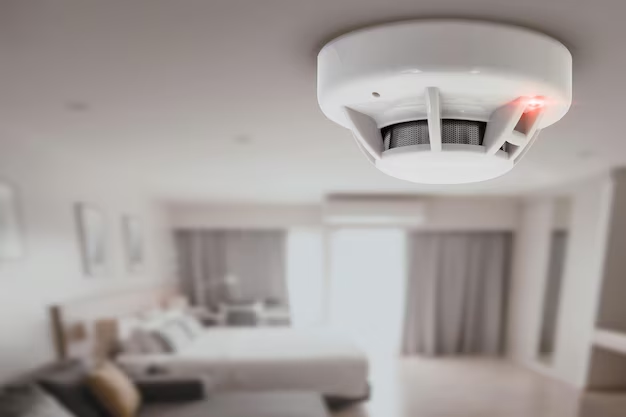
- Detection and warning: Smoke alarms and, in some cases, heat detectors and carbon monoxide alarms play central roles. Research has found that working smoke alarms are associated with reduced fire-related injuries and deaths, though not all studies agree on the exact degree of reduction.
- Safe escape: Clear exit routes, knowledge of ways out of the home, and awareness of how fast modern household materials can burn all influence survival chances.
- Burn prevention: Tap water temperature, stove and oven use, space heater placement, and handling of hot liquids are all frequent topics.
People’s needs differ: someone in a small studio apartment with one exit faces different fire planning questions than someone in a multi-story house with children and pets.
2. Fall and Injury Prevention
Falls are a leading cause of non-fatal injuries at home across age groups, but the consequences can be especially serious for older adults.
Common elements of fall-related home safety include:
- Environmental hazards: Loose rugs, cluttered floors, steep or narrow stairs, poor lighting, and slippery bathrooms.
- Structural supports: Handrails, grab bars, non-slip surfaces on stairs and in showers, and step heights.
- Footwear and mobility aids: Shoes, walking aids, and how they are used in the home environment.
- Vision and medication factors: Many studies show that vision problems and certain medicines are associated with increased fall risk.
For younger, healthy adults, falls may be more likely around hobbies (such as home repairs, ladders, or exercise equipment). For older adults, everyday activities like getting out of bed, bathing, or walking to the bathroom at night may be the key focus.
3. Poisoning, Chemical, and Carbon Monoxide Safety
Home poisoning risks are not limited to obvious substances like pesticides. They also include medications, alcohol, cleaning products, cosmetics, batteries, and gases like carbon monoxide.
Important concepts include:
- Safe storage and labeling: Keeping toxic items out of reach of children and clearly labeled reduces accidental exposures.
- Medication management: Dose confusion, mixing medications, and storing medicines in unlabeled containers are recurring issues in many poisoning cases.
- Carbon monoxide (CO): CO is a colorless, odorless gas produced by incomplete burning of fuel. Research links CO incidents strongly to improper use of heaters, stoves, generators, and blocked vents or chimneys.
- Local poison control resources: Many regions have poison information centers that provide guidance if exposure occurs.
The specific mix of concerns changes with who is in the home. A home with small children might focus heavily on child-resistant packaging and locked cabinets; a home with older adults might pay particular attention to medication management and heating systems.
4. Choking, Suffocation, and Strangulation Hazards
These hazards are especially relevant in homes with infants and young children, but can also affect older adults with certain health conditions.
Home safety discussions in this area often cover:
- Food and small object hazards: Certain foods and small, detachable toy parts are common choking risks for young children.
- Cords and strings: Window blind cords, long cables, and strings on clothing or toys can be strangulation risks in specific situations.
- Sleep environments: Soft bedding, loose blankets, and object-filled cribs have been linked to suffocation risks in infants in some studies.
- Plastic bags and packaging: These can pose suffocation hazards to children if used unsafely.
Age, developmental stage, and any underlying medical conditions all shape how pressing each of these issues is for a specific household.
5. Electrical and Gas Safety
Electrical and gas systems are part of everyday life, but can be sources of shocks, burns, fires, and explosions if something goes wrong.
Relevant topics typically include:
- Wiring and outlets: Overloaded circuits, exposed wiring, lack of ground-fault protection near water, and use of unapproved extension cords.
- Appliance use: Placement, maintenance, and proper venting of appliances such as dryers, heaters, stoves, and water heaters.
- Gas lines and connections: Leaks, faulty installation, and aging infrastructure.
- Regional standards and codes: Building regulations often dictate minimum safety features, but actual implementation varies widely.
What is possible to change depends heavily on whether a person owns or rents, the age and design of the home, and the availability of qualified professionals in the area.
6. Water, Drowning, and Bathroom Safety
Drowning is often associated with pools and open water, but bathtubs, buckets, and even toilets can pose risks, especially for young children.
Home water safety topics often include:
- Pool and spa safety: Fencing, covers, alarms, and supervision practices. Studies generally find that barriers like fencing can reduce unsupervised access, though the strength of evidence varies by setting.
- Bathtubs and showers: Slips and falls, very hot water, and unsupervised bathing.
- Water temperature: Extremely hot tap water can cause scalds, particularly in children and older adults.
- Flooding and leaks: Beyond property damage, floods and standing water can cause mold growth and contamination, affecting respiratory health and infection risk.
People in apartments without pools will naturally focus on different questions than those in homes with private pools or in flood-prone areas.
7. Crime Prevention and Home Security
While “home safety” often brings to mind accidents, many people also include protection from crime and intrusions.
Researchers and crime prevention professionals usually consider:
- Physical security: Locks, doors, windows, lighting, and visibility from the street.
- Access control: Who has keys, fobs, or codes; how packages and visitors are handled; how shared entrances are managed.
- Environmental design: Principles sometimes called “crime prevention through environmental design” (CPTED), which look at visibility, access, and how spaces are used.
- Personal habits: Locking routines, how valuables are stored, and what information is shared about the home and its occupants.
The balance between security, privacy, cost, and comfort is highly individual. Some people prioritize openness and frequent visitors; others focus more on minimizing access.
8. Emergency Preparedness and Disaster Readiness
Emergency preparedness in the home looks beyond everyday hazards to events like:
- Severe weather (storms, extreme heat or cold)
- Earthquakes
- Wildfires
- Floods
- Long power outages
- Local infrastructure failures (water, gas, or communication disruptions)
This area of home safety often involves:
- Knowing local risks: Different regions face different primary threats, and local authorities usually publish hazard maps and guidance.
- Plans and communication: How household members will contact one another and where to go in different scenarios.
- Supplies and backups: Food, water, medications, light sources, and ways to stay warm or cool when normal services are unavailable.
- Protecting critical information: Safely storing documents and backups of important data.
Evidence suggests that while many people recognize the value of preparedness, fewer feel fully prepared. Barriers commonly include cost, time, and uncertainty about what exactly to prioritize.
9. Special Considerations: Pets, Home Offices, and Technology
Modern homes often include features that introduce new kinds of safety questions:
- Pets: Pet medications, cleaning products, and small objects can pose risks to animals. At the same time, pets can accidentally create hazards (chewing cords, knocking over candles, or obstructing walkways).
- Home offices: Increase in electrical equipment, cabling, and sometimes chemicals like printer toners or adhesives; potential issues with extended sitting in improvised setups also intersect with occupational health.
- Smart home technology: Internet-connected locks, alarms, and cameras offer new tools. They also raise questions around reliability, privacy, data security, and dependence on power and internet access.
Research on some of these newer areas (especially smart home tech) is still emerging. Evidence tends to focus on specific device categories rather than providing a complete picture for every type of household.
How Approaches to Home Safety Compare
Different homes often combine several approaches to address similar risks. At a general level, you can think of three broad types:
| Approach type | Examples in home safety | General strengths | General limitations |
|---|---|---|---|
| Physical / engineered | Handrails, alarms, locks, guards, non-slip flooring | Do not rely heavily on daily memory or willpower; can work continuously | Upfront cost; may require professional installation or landlord permission |
| Behavioral / routine | Checking stoves, locking doors, safe storage habits | Very flexible; often low cost; adaptable to changing needs | Easy to forget or relax over time; depends on training and motivation |
| Policy / environmental | Building codes, rental rules, community standards | Can improve safety across many homes at once | Implementation and enforcement vary; may lag behind new risks |
Studies in injury prevention commonly find that combinations of these approaches are more effective than any one alone. For example, preventing injuries from falls on stairs might involve:
- A building code requiring handrails (policy)
- Installing non-slip stair treads (physical)
- A household habit of keeping stairs free of clutter (behavioral)
But every combination has trade-offs, and what is realistic depends on individual circumstances.
Evidence, Uncertainty, and Local Expertise
Home safety is a field where public health research, engineering, and real-world experience all contribute. Some findings are well-established and widely accepted, such as:
- Functioning smoke alarms can help reduce harm from residential fires.
- Fall risks often increase with age and are influenced by both environment and health factors.
- Child-resistant packaging and safer storage are associated with fewer certain types of poisonings.
Other areas have mixed or limited evidence, especially where technologies are new, behavior is complex, or situations vary widely. For example:
- The exact impact of specific smart-home security devices on burglary risk can be hard to measure reliably.
- The best ways to encourage long-term safety behaviors (like regular testing of alarms) are still being studied.
- The effectiveness of some specific emergency preparedness steps can depend heavily on the nature and scale of actual events.
Because of these uncertainties, many experts stress the value of local and professional input:
- Building inspectors, electricians, plumbers, and heating professionals can speak to structural issues.
- Local fire departments and emergency management agencies often provide region-specific safety information.
- Health professionals can advise on individual risk factors like medications, mobility, and respiratory conditions.
This guide outlines the main concepts. Matching those to your specific home, health, and community context typically calls for closer, sometimes professional, attention.
Choosing What to Explore Next
“Home safety” is a broad category. People usually narrow in based on what feels most relevant and urgent in their own lives. Common next steps include:
- Exploring fire and smoke safety more deeply if they cook often, use space heaters, or live in multi-unit buildings.
- Looking closely at fall prevention if they or someone they live with has mobility issues, vision changes, or a history of falls.
- Focusing on child safety at home if there are infants, toddlers, or frequent young visitors.
- Learning about carbon monoxide and heating safety if they use fuel-burning appliances or backup generators.
- Reviewing home security and crime prevention if they are concerned about break-ins or live in an area with higher property crime.
- Studying emergency preparedness if they live in a disaster-prone region or have health needs that could be affected by power or water outages.
The research shows that risk levels and best-fit measures are rarely the same from one household to the next. Understanding the broad landscape of home safety helps you ask more precise questions about your own situation—and recognize when it may be useful to seek local or professional insight tailored to your home and the people who live in it.