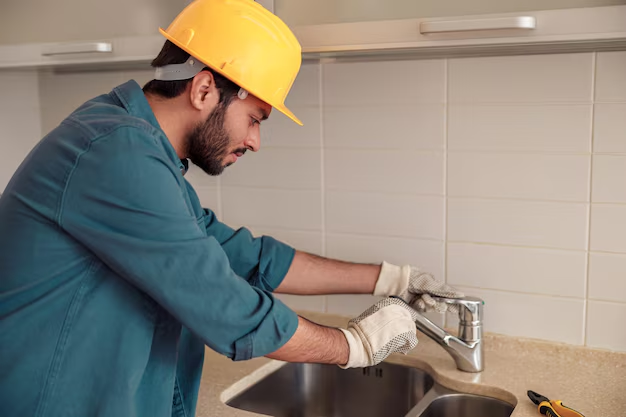
DIY Repairs: An Everyday Guide to Fixing What You Own
DIY repairs sit at the practical, problem-solving end of the broader DIY projects world. While DIY projects can include decorating, building new things, or crafts, repairs focus on a simpler question:
“Something is broken, not working, or worn out. Can I reasonably fix it myself?”
This page is a plain-language guide to that territory. It explains what “repairs” usually cover, the trade-offs people face when deciding whether and how to fix things themselves, and the main questions that tend to come up along the way.
It cannot tell you what you should do in your specific situation. That depends on your skills, tools, safety, and local rules. Instead, it gives you a clear map so you can see where your own circumstances fit in.
What Counts as a DIY Repair?
In this sub-category, repairs generally mean:
- Fixing something that used to work but now doesn’t
- Restoring function (and sometimes appearance), not upgrading for its own sake
- Working on things you already own: your home, car, bike, clothes, appliances, electronics, furniture, and more
Within DIY projects, repairs are distinct because they are:
- Problem-driven: You start because something went wrong.
- Constrained: You’re working around existing structures or parts, not starting from scratch.
- Risk-sensitive: Mistakes can create safety issues, further damage, or higher later costs.
Typical areas this covers include:
- Home and building repairs: Patching drywall, fixing a leaky faucet, repairing a door that sticks, sealing drafts, replacing a toilet tank part.
- Appliance and electronics repairs: Replacing a washing machine pump, fixing a loose laptop hinge, changing a phone battery.
- Vehicle and bike repairs: Replacing brake pads, fixing a flat tire, swapping bulbs, changing oil (where allowed and feasible).
- Furniture and wood repairs: Tightening joints, re-gluing chairs, filling scratches, replacing drawer slides.
- Clothing and textiles repairs: Patching holes, replacing zippers, sewing on buttons, fixing hems.
Why does this distinction matter? Because the skills, risks, and decision-making around repairs differ from those in creative or purely aesthetic DIY:
- You’re often working under time pressure (the shower is leaking today).
- There may be health, safety, or legal issues (gas lines, electrical systems, structural elements).
- The decision to repair vs. replace vs. call a professional often has long-term cost and safety implications.
Understanding these differences helps you ask better questions before you pick up a tool.
How DIY Repairs Typically Work: From Symptom to Fix
Almost every repair, from a wobbly chair to a noisy furnace, follows the same basic pattern:
Notice a symptom
Something changes: a sound, a leak, a failure to turn on, a visible crack, a bad smell, or a performance drop.Diagnose the cause
You try to figure out why this is happening. This is often the hardest part.Choose a repair approach
You decide whether to attempt a fix, which fix to try, and how “permanent” it needs to be.Gather tools and parts
You line up what you need: tools, replacement parts, consumables (like glue or tape), and instructions.Perform the repair
You follow a sequence of steps to access the problem area, remove damaged parts, install or rebuild, and reassemble.Test and monitor
You check whether the repair worked and whether any side effects or new issues show up.
Each stage has its own challenges and trade-offs.
1. Diagnosing the Problem: The “Invisible” Skill
For many people, diagnosis is where DIY repairs either succeed or stall.
Established repair experts and engineers generally point out that:
- Many different faults can produce similar symptoms. For example, a washing machine that won’t drain could have a clogged filter, a broken pump, a blocked hose, or a control issue.
- Good diagnosis usually starts with simple, low-risk checks: Is it plugged in? Is a breaker tripped? Is there a visible obstruction?
- More advanced diagnosis may involve measuring and testing (like using a multimeter, continuity tester, or pressure gauge).
Evidence from fields like maintenance engineering and reliability research shows that systematic troubleshooting (checking one possible cause at a time in a logical order) tends to reduce wasted effort and misdiagnosis. However, those findings often come from professional settings with trained technicians and may not fully reflect home situations where tools and knowledge are limited.
In practical terms, DIY diagnosis often relies on:
- Familiarity with how the object should behave
- Step-by-step guides, manuals, and diagrams
- Trial and error, which may carry some risk of causing further damage
The better your understanding of how a system works, the more likely you are to diagnose accurately—but people’s starting points vary widely.
2. Levels of Repair: Temporary, Functional, and Full Restoration
Not every fix aims for “like new” condition. Many repair decisions fall into one of three rough levels:
| Repair level | Aim | Typical traits |
|---|---|---|
| Temporary / stopgap | Buy time | Quick, minimal tools, may look rough |
| Functional | Restore use, not perfection | Solid enough for regular use, cosmetic flaws |
| Full restoration | As close to original as practical | More time, cost, parts, and attention to detail |
Research on consumer behavior and household maintenance suggests that people often accept functional or temporary repairs when:
- The item is inexpensive or nearing the end of its life
- A full restoration is out of budget or not urgent
- The item has low safety risk if the repair degrades
But the same research and expert opinion stress that this depends heavily on what is being repaired. A cosmetic crack in a plastic bin is one thing; a “temporary” repair on safety-critical brakes or structural supports is another.
3. Repair vs. Replace vs. Hire Out
A central decision in this sub-category is whether to:
- Attempt the repair yourself
- Replace the item
- Pay a professional to repair it
There is no general right answer. However, multiple lines of research and expert consensus point to common factors people tend to weigh:
- Safety risk: Could a bad repair cause fire, flooding, structural failure, loss of control while driving, or other serious harm?
- Complexity and hidden systems: Electrical panels, gas appliances, structural walls, and electronics with delicate circuits often demand more knowledge.
- Cost, time, and access to parts: Sometimes replacement is cheaper or faster than obtaining specialized parts or tools.
- Emotional and environmental factors: People may choose to repair due to sentimental value or to reduce waste, even if it is not the cheapest option.
These choices are strongly shaped by personal circumstances: skills, confidence, local regulations, financial situation, and access to professionals.
Key Variables That Shape DIY Repair Outcomes
Whether a DIY repair goes smoothly or turns into a frustrating saga rarely comes down to a single issue. Several variables tend to matter across many situations.
1. Safety and Risk Tolerance
Repair experts consistently treat safety as the primary consideration. Your own risk tolerance and understanding of hazards will shape what you may feel comfortable doing.
Common risk categories include:
- Electrical hazards: Shock, burns, fire. Working with mains or high-voltage systems often carries strict safety codes.
- Gas and fuel hazards: Leaks, explosion, poisoning (for example, carbon monoxide).
- Structural risks: Removing or altering load-bearing elements, supports, or anchors wrongly can cause collapses or long-term damage.
- Mechanical and moving parts: Pinch points, rotating blades, springs under tension.
- Chemical exposure: Solvents, adhesives, cleaners, paints, insulation materials.
- Environmental and health concerns: Mold, asbestos, lead paint, contaminated dust.
Occupational health and safety research shows that many accidents happen when people underestimate routine tasks or improvise with the wrong tools. But these studies often focus on workplaces rather than home settings. Still, the general principle carries over: familiar tasks can still be risky, especially when done in unfamiliar ways.
Different people draw the line in different places. Some will only do low-risk repairs; others tackle more advanced work after careful study. Neither approach is “right” for everyone.
2. Skill Level and Experience
DIY repair skills usually grow gradually:
- Beginner: Comfortable with simple, non-hazardous tasks (tightening screws, basic patching, replacing obvious parts).
- Intermediate: Able to follow more complex instructions, use measuring tools, and understand basic systems (plumbing traps, circuits, mechanical linkages).
- Advanced: Able to diagnose less obvious faults, read technical diagrams, and adapt when things are not “by the book.”
Studies on learning technical skills (including trades training and vocational education) tend to show that hands-on practice, clear feedback, and repeated exposure improve performance over time. But access to practice, guidance, and safe learning environments differs from person to person.
When reading about repairs, it can help to honestly ask yourself:
- Do I already know how this system works at a basic level?
- Have I done anything similar before?
- Do I understand what might go wrong if I get it wrong?
Your answers influence which kinds of repair information will be useful or realistic for you.
3. Tools, Parts, and Workspace
Even simple repairs can become stressful without:
- Basic tools (like screwdrivers, pliers, a utility knife, tape measure, small level)
- Safe workspace (enough light, ventilation, a stable surface, and room to move)
- Access to parts (hardware stores, parts suppliers, or online sources)
Engineering and maintenance research points out that having the right tool for the job generally:
- Reduces damage to parts and fasteners
- Lowers the chance of injury
- Improves the quality and consistency of repairs
However, in everyday life, people often make do with what they have. That can work for some jobs and fail badly for others, especially where precise torque, alignment, or sealing is important.
4. Time, Budget, and Patience
DIY repairs can save money or provide satisfaction—but they can also take longer than expected.
Consumer and behavioral research suggests that people frequently underestimate the time and effort complex tasks will take (sometimes called the “planning fallacy”). Repairs are no exception, especially when:
- Hidden damage appears partway through
- Parts are stuck, corroded, or incompatible
- Instructions assume a different model or setup
Whether a repair feels “worth it” often depends on:
- How urgent the fix is (leaking roof vs. squeaky door)
- Your budget for parts and possible rework
- Your willingness to treat this as a learning experience rather than a quick chore
5. Regulatory and Warranty Considerations
Some repairs intersect with:
- Building codes and local laws (for example, electrical and gas work, structural changes)
- Vehicle inspection and road-worthiness rules
- Manufacturer warranties that may be affected by opening or modifying devices
Legal and policy research around “right to repair” highlights these tensions: people often wish to repair their own devices and property, while manufacturers and regulators may set boundaries aimed at safety, intellectual property, or product integrity.
What this means in practice varies by country, state, and even city. People’s awareness of these rules also varies widely. That’s one reason general guides can’t reliably say what you are allowed or prohibited from doing.
A Spectrum of DIY Repair Situations
People come to repairs with very different backgrounds and goals. The same problem—a broken light fixture, for example—can look very different depending on who you are and what matters to you.
Here is a simplified way to think about the spectrum:
The “Quick Fixer”
This person values speed and basic function over perfection. They may:
- Use simple, temporary fixes to get through the week
- Focus on non-critical items or low-risk systems
- Prefer familiar tasks (tightening, gluing, taping) over complex disassembly
For them, articles about easy common fixes, quick checks, and visual guides might be most useful.
The “Careful Beginner”
This person is willing to learn, but cautious:
- Prefers clear, step-by-step instructions
- Stays away from electricity, gas, or structural work
- Starts with lower-stakes repairs to build confidence
They may benefit from resources that explain basic concepts (how a trap works, what a circuit breaker does) alongside the repair steps.
The “Hands-On Generalist”
This person has some experience and tools:
- Comfortable opening up appliances or fixtures
- Familiar with safety basics in at least one area (for example, carpentry, auto, or plumbing)
- Willing to research and troubleshoot when things don’t match the instructions
They may seek deeper articles on diagnosis methods, compatibility of parts, and how to tell when to stop and reassess.
The “Specialist DIYer”
This person has advanced skills in at least one domain:
- May have professional or trade experience
- Confident with detailed manuals, schematics, and custom solutions
- Often repairs or restores items others might discard
They tend to look for very specific technical information, compatibility details, and niche repair techniques.
Most people move between these profiles depending on the item (you might be a beginner with plumbing, but a specialist with bikes). Recognizing where you stand for each type of repair can help you choose resources that match your needs.
Common Types of DIY Repairs and How They Differ
Within the repairs sub-category, several major areas show up over and over. Each has its own typical systems, failure patterns, and concerns.
1. Home and Building Repairs
These involve the structure, surfaces, and systems of where you live:
- Interior surfaces: Fixing holes in drywall, cracks in plaster, loose tiles, squeaky floors.
- Doors and windows: Sticking doors, misaligned latches, drafts, broken locks, window balance issues.
- Plumbing fixtures: Dripping faucets, running toilets, slow drains, minor leaks at visible joints.
- Basic electrical fixtures: Replacing light switches, outlets, fixtures, or bulbs—depending on local rules and your comfort level.
- Weatherproofing: Sealing gaps, replacing worn weatherstripping, minor roof or gutter repairs at accessible points.
Building science and maintenance research shows that small issues can grow into larger problems if ignored—like slow leaks that lead to rot or mold. But it also notes that access, climate, and building type significantly affect what “small” or “manageable” means.
DIY resources in this area often focus on:
- How systems are laid out (for example, supply and drain lines)
- Typical failure points (for example, worn seals, loose fasteners)
- How to spot when a problem might be more serious than it looks
2. Appliance and Electronics Repairs
These repairs cover the machines and devices you use daily:
- Large appliances: Washing machines, dryers, dishwashers, refrigerators, ovens.
- Small appliances: Vacuums, microwaves, coffee makers, blenders.
- Consumer electronics: Laptops, phones, tablets, TVs, game consoles.
Research in product design and sustainability shows that modular designs and accessible parts generally make repair more feasible, while sealed, glued, or proprietary designs complicate DIY work. But what you face depends heavily on the brand, model, and age of your specific device.
Key questions in this area include:
- Are spare parts reasonably available?
- Does opening the device affect safety or regulatory certifications (for example, high-voltage areas)?
- Is the fault likely to be a common, well-documented issue, or something obscure?
DIY repair guides here often emphasize:
- Step-by-step disassembly and reassembly
- Careful handling of delicate connectors and cables
- Understanding when data, calibration, or software might be involved
3. Vehicle and Bike Repairs
Vehicles and bikes introduce safety-critical repairs more often than many other categories.
Common DIY tasks may include:
- Bikes: Fixing flats, adjusting brakes and gears, replacing chains, trueing wheels, greasing bearings.
- Cars (where allowed and feasible): Replacing wiper blades, bulbs, cabin air filters, some fluids, basic brake components, simple sensors or hoses.
- Other vehicles: Lawnmowers, small engines, scooters, and similar devices.
Automotive and transport safety research makes it clear: incorrect repairs on key systems (brakes, steering, suspension, fuel, airbags) can have serious consequences. Many regions have strict inspection and safety rules for vehicles, and modern cars often contain complex computer systems.
DIY repair information in this area often covers:
- Recognizing basic wear and failure signs
- Using appropriate supports (like jack stands) and protective gear
- Following torque, alignment, and bleeding procedures accurately where applicable
How much of this is realistic or advisable for you personally depends on your skills, tools, and local requirements.
4. Furniture, Wood, and Household Items
These repairs are often more forgiving but can still be important:
- Tightening or re-gluing loose chair joints
- Repairing cracked or chipped veneer
- Filling scratches and dents in wood surfaces
- Fixing broken drawers, hinges, or latches
- Repairing broken handles, knobs, hooks, and similar hardware
Woodworking and furniture restoration literature emphasizes matching adhesives, fillers, and finishes to the material and use. Some fixes aim mainly at function (stop the wobble); others aim to preserve appearance or historical value.
DIY guides in this space often explain:
- How glues, fillers, and fasteners differ
- How to prepare surfaces for repair
- The trade-offs between invisible and visible repairs
5. Clothing, Textiles, and Soft Goods
Textile repairs matter for clothing, bedding, bags, and other fabric items:
- Sewing on buttons and snaps
- Repairing seams and hems
- Patching holes in knees, elbows, or other wear areas
- Fixing zippers, elastic, or drawstrings
- Mending tears in upholstery or soft furnishings
Research in sustainability and fashion highlights that simple mending can significantly extend the life of garments, reducing waste and environmental impact. But again, people’s skills, time, and priorities vary.
DIY resources here often focus on:
- Basic hand-stitching techniques
- Choosing appropriate thread, needles, and patches
- Balancing neatness, durability, and time spent
How Different Approaches to Repair Compare
People approach repairs with different mindsets. Each general approach has strengths and weaknesses, and none suits everyone or every situation.
| Approach style | Typical traits | Potential strengths | Potential limitations |
|---|---|---|---|
| Rule follower | Follows instructions step-by-step | Safer, fewer missed steps | Can get stuck when real life differs from guide |
| Experimenter | Tries, observes, adjusts | Can improvise with limited resources | Higher risk of missteps or hidden damage |
| Minimalist | Does the smallest possible fix | Saves time and effort | May need frequent rework |
| Perfectionist | Aims for near-original quality | High-quality, long-lasting repairs | Can take much longer, higher frustration |
| Delegator | Quickly calls a pro for most issues | Predictable quality (when pro is competent) | Higher direct cost, less personal skill growth |
Research on problem-solving suggests that people who blend structured methods (like checklists) with flexibility (willingness to adapt when conditions change) often perform well in technical tasks. But those findings usually come from professional or educational settings, not casual home repair, so their direct applicability to any individual's DIY work is limited.
Core Concepts and Terms You’ll See in Repair Guides
Across the sub-category, certain terms come up often. Understanding them can make any repair information easier to follow.
- Fastener: Any device that holds parts together, such as screws, bolts, nails, clips, rivets.
- Seal / gasket / O-ring: A component that keeps fluids or gases from leaking between joined parts.
- Coupling / joint: A point where two parts meet and move or transfer force.
- Load-bearing: A part or wall that carries weight or structural forces.
- Voltage / current: Electrical concepts relating to force and flow; important for safety but often simplified in basic DIY guides.
- Torque: The turning force applied to a bolt, screw, or nut; too little or too much can cause failures.
- Corrosion: Gradual damage from chemical reactions, like rust on metal.
- Preventive maintenance: Work done to prevent problems before they occur (lubricating, tightening, cleaning).
These terms typically appear alongside more detailed explanations in specific articles, but having a rough sense of them helps you scan repair information and decide where to slow down and read carefully.
How Research and Expertise Inform DIY Repair Guidance
Even though many everyday repairs happen far from laboratories or classrooms, several research fields and expert communities influence what’s considered sound repair practice:
- Engineering and maintenance science study how systems fail and how to keep them running. They inform concepts like preventive maintenance and root-cause analysis.
- Human factors and ergonomics examine how people interact with tools and systems, including common error patterns and how to design safer, more intuitive interfaces.
- Building science and codes combine materials science, safety data, and practical experience to shape rules around electrical, plumbing, and structural work.
- Product design and “right to repair” research explore how design choices affect repairability and how policies influence consumer repair options.
- Vocational education and training research looks at how people learn hands-on skills effectively.
These bodies of work generally support some broad ideas you’ll see echoed in many repair guides:
- Clear, stepwise processes reduce mistakes.
- Matching tools and techniques to the job improves results and safety.
- Regular maintenance often prevents or delays more serious repairs.
- Documentation and labeling (photos, notes, part tags) help avoid confusion during reassembly.
However, much of the evidence behind these ideas comes from professional contexts, not informal DIY work at home. People’s living spaces, time pressures, and access to training are very different from those of trained technicians. So while the principles are widely accepted, how they apply to your specific repair may vary.
What Readers Commonly Explore Next Within DIY Repairs
Once people understand the general landscape, they tend to dive into more specific questions, such as:
“Is this repair safe to try myself?”
This leads into safety-focused articles by system: electrical, plumbing, gas, structural, and so on. These pieces often break down typical hazards and warning signs that a problem may be bigger than it appears.“How can I tell what’s actually wrong?”
Diagnostic guides walk through symptom-based troubleshooting for common items—noisy washing machines, flickering lights, dripping faucets, car noises, and similar issues.“What basic tools make home repairs more realistic?”
Readers often look for overviews of core hand tools, measuring tools, and safety gear, along with explanations of what each is commonly used for.“How do I repair [specific thing]?”
This includes detailed guides on narrow topics like patching drywall, changing a faucet cartridge, fixing a stuck window, replacing a phone screen, or mending a torn seam.“How do I know when to stop and call someone?”
Many people want practical markers that a job may be beyond their current scope: repeated failures, hidden damage, regulatory issues, or new symptoms during the repair.
Each of these subtopics branches into its own set of techniques, terms, and trade-offs. The right path for you depends on what is broken, what matters most to you (safety, cost, learning, time), and what you already know or are willing to learn.
Your exact circumstances—your home, your tools, your comfort level, and your local rules—are the missing pieces that determine which parts of this broader repairs landscape apply to you.