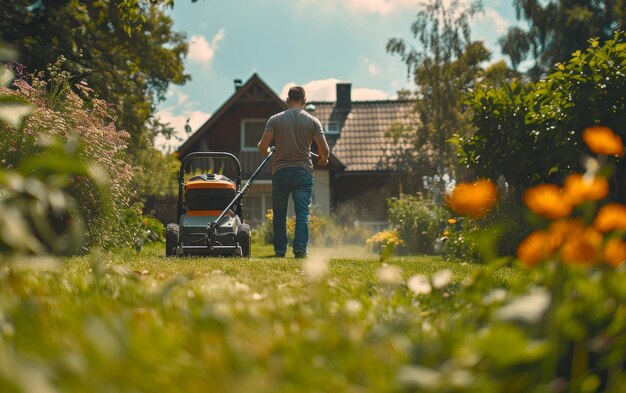
Lawn & Garden: A Practical, Research-Based Guide to Your Outdoor Space
The phrase “lawn and garden” covers much more than grass and a few flowerbeds. It includes everything involved in creating, maintaining, and enjoying outdoor spaces around homes and shared properties: soil, plants, water, tools, design, and how people actually use the space.
This guide looks at lawn and garden care as a whole system. It explains the basic ideas, what researchers and horticulture experts generally agree on, and how very different the “right” choices can be depending on climate, goals, budget, time, and personal preferences.
You will not find one-size-fits-all rules here. Instead, you’ll see the main areas to think about and how they connect, so you can better understand which questions matter most for your own yard.
1. What “Lawn & Garden” Actually Covers
In everyday use, lawn and garden usually includes:
- Lawns – Areas of mostly grass, usually kept mowed and relatively even.
- Gardens – Areas where plants are intentionally grown: flowers, shrubs, trees, herbs, vegetables, fruits.
- Soil and growing media – The layer plants grow in: natural soil, raised-bed mixes, pots and containers.
- Watering and irrigation – From hand-watering with a hose to automated systems.
- Landscaping and design – How plants, paths, patios, and structures are arranged.
- Care and maintenance – Mowing, pruning, weeding, fertilizing, pest and disease management.
- Wildlife and ecology – Birds, pollinators, insects, pets, and other animals that share the space.
- Outdoor living – How people use the area: play, relaxation, food-growing, aesthetics.
Researchers and experienced horticulturists tend to look at all of these as parts of one landscape system. Changes in one area (for example, how often you water) usually affect others (disease risk, weeds, root depth, water bills, and more).
A few useful terms you’ll see often:
- Turfgrass: Grass species used for lawns (for example, cool-season vs. warm-season grasses).
- Ornamental plants: Plants grown mainly for appearance (flowers, foliage, form).
- Native plants: Plants that occur naturally in a region without human introduction.
- Annuals / perennials: Annuals complete their life cycle in one season; perennials live for multiple years.
- Hardiness zone: A climate rating (for example, USDA zones in the U.S.) based mainly on winter low temperatures, used to estimate which plants can survive outdoors.
2. How Lawn & Garden Systems Work
Beneath the surface, lawn and garden care comes down to a few core processes that researchers have studied for decades: soil health, water movement, plant growth, and ecological interactions. These processes are always happening, whether people notice them or not.
2.1 Soil: The Foundation of Lawn and Garden Health
Most experts see soil as the starting point. Healthy soil is not just dirt; it is a mix of:
- Mineral particles (sand, silt, clay)
- Organic matter (decaying plant and animal material)
- Water and air
- Living organisms (bacteria, fungi, insects, worms)
Research generally shows that soils with more organic matter and biological activity:
- Hold water better but still drain excess.
- Provide nutrients to plants more steadily.
- Support deeper, stronger root systems.
- Are more resilient to drought and heavy use.
On the other hand, compacted or low-organic-matter soils often:
- Drain poorly or dry out very fast.
- Make it harder for roots to spread.
- Increase problems like standing water, weeds, and disease.
The “right” soil management depends on what you are growing and your local conditions. For example, a sports field has different demands than a small flower bed, even if both technically fall under “lawn & garden.”
2.2 Water: Irrigation, Drainage, and Drought
Lawns and gardens interact constantly with water: rain, irrigation, evaporation, and runoff.
Researchers in turf science and horticulture have identified a few broad patterns:
- Too little water stresses plants, limits growth, and can lead to thinning lawns and plant death.
- Too much water encourages shallow roots and increases disease risk, especially fungal problems.
- Watering frequency and depth shape root systems; infrequent, deeper watering tends to encourage deeper roots in many grass and plant species.
But the right water balance is heavily influenced by:
- Soil type (sandy vs. clay vs. loam).
- Plant choice (shallow vs. deep-rooting species, drought tolerance).
- Climate (rainfall patterns, humidity, temperature).
- Slope and drainage (how quickly water runs off or pools).
Because of these many variables, general “rules” about watering times and amounts usually need adjusting for each yard.
2.3 Light, Temperature, and Climate
Plants in lawns and gardens rely on light and are shaped by temperature and wider climate patterns.
Research and long-term plant trial data show:
- Different plants have specific light needs: full sun, partial shade, or full shade.
- Hardiness zones give a rough idea of which plants can survive winter outdoors.
- Heat, humidity, wind, and seasonal patterns all influence which plants tend to thrive, struggle, or become invasive.
For lawns, turfgrass experts typically group grasses into:
- Cool-season grasses that grow best in cooler temperatures and may struggle in hot summers.
- Warm-season grasses that grow best in warmer conditions and may go dormant or brown in cooler seasons.
Again, this varies by region and even by microclimates within a single yard (for example, a shady north-facing side vs. a sunny south-facing side).
2.4 Nutrients and Fertility
Plants need certain nutrients to grow: mainly nitrogen, phosphorus, potassium, and smaller amounts of others like iron, magnesium, and zinc.
Research in plant nutrition and soil science generally shows:
- Both deficiencies and excesses can harm plants.
- Nutrient availability depends on soil pH, organic matter, moisture, and microbial activity.
- Over-fertilizing can lead to runoff that affects nearby waterways.
Most university extension services emphasize the importance of understanding soil conditions (often through testing) before deciding how to manage fertility, because two yards that look similar can have very different nutrient profiles.
2.5 Pests, Weeds, and Diseases
Every lawn and garden exists within a larger ecosystem of insects, fungi, animals, and competing plants (weeds).
Research in integrated pest management (IPM) shows:
- Not all insects or fungi are harmful. Many are neutral or beneficial (pollinators, natural predators, decomposers).
- Stress from poor soil, improper watering, or unsuitable plant choice often makes lawns and gardens more vulnerable to pests and disease.
- Long-term pest and weed pressure is influenced by the overall design and management of the landscape, not just any single treatment.
Because of this, many experts think in terms of systems: how plant choice, layout, watering habits, mowing height, and other practices add up to either support or weaken plant health over time.
3. Key Variables That Shape Lawn & Garden Outcomes
There is no single “best” approach to lawn and garden care. Outcomes vary widely based on a mix of environmental, personal, and practical factors.
Here are some of the main variables that tend to shape results.
3.1 Climate and Local Environment
- Region and hardiness zone influence what plants can survive outdoors.
- Rainfall patterns shape irrigation needs and drainage challenges.
- Temperature extremes (heatwaves, deep freezes) affect plant survival and stress.
- Urban vs. rural settings change heat, wind patterns, and wildlife presence.
Two people with identical lawn care routines can see completely different outcomes if one lives in a cool, wet coastal area and the other in a hot, dry inland region.
3.2 Soil Type and Site Conditions
- Soil texture (sand, silt, clay) affects drainage, nutrient holding, and root growth.
- Slope and grading influence where water collects or runs off.
- Shade patterns from trees and buildings shape which plants and grasses can grow.
- Existing vegetation (mature trees, invasive plants) can limit options or require special handling.
These site conditions often explain why one part of a yard thrives while another struggles, even if treated the same.
3.3 Goals and Personal Priorities
Different people want different things from their outdoor space. Common goals include:
- A mostly ornamental yard focused on appearance.
- A low-maintenance landscape that needs little ongoing work.
- Play and recreation space for children or pets.
- Food production through vegetable gardens, fruit trees, or herbs.
- Support for wildlife and pollinators through habitat-friendly design.
- Meeting community or homeowners’ association appearance standards.
These goals often conflict. For example, a closely manicured lawn may not align with a wildlife-focused, low-input garden, and a busy household might prioritize durability over aesthetics.
3.4 Time, Budget, and Tools
- Time available for mowing, weeding, pruning, and cleanup.
- Budget for soil amendments, plants, tools, and possible professional help.
- Access to equipment (mowers, trimmers, irrigation systems, hand tools).
- Physical ability and safety considerations.
Research on home gardening and landscaping behavior consistently finds that available time and resources strongly influence which practices people actually follow, regardless of what might be ideal in theory.
3.5 Knowledge, Experience, and Interest
- Familiarity with basic horticulture concepts (soil, light, watering).
- Comfort with learning from trial and error.
- Interest in experiments, such as growing new species or changing lawn areas to garden beds.
Novice gardeners often benefit from simple, clear structures (for example, starting with a small area) while very experienced gardeners may manage complex plantings and detailed care routines.
4. The Spectrum of Lawn & Garden Approaches
Modern lawn and garden care exists along multiple spectrums, not in neat categories. Here are some of the most common ways these approaches vary.
4.1 From High-Input Lawns to Diverse Plantings
At one end are high-input lawns: large areas of uniform turfgrass, mowed frequently and often managed with regular fertilization, irrigation, and weed control.
At the other end are diverse plantings: mixed garden beds, shrubs, trees, groundcovers, and maybe smaller lawn patches or no lawn at all.
Researchers and practitioners note broad trade-offs:
| Approach Type | Typical Benefits (General) | Typical Trade-offs (General) |
|---|---|---|
| Large, uniform turf lawn | Simple surface for play; consistent look | Often higher water, mowing, and input needs |
| Mixed ornamental plantings | Visual interest; habitat; seasonal variety | More complex plant selection and maintenance |
| Mostly native plantings | Better fit to local climate; wildlife support | Availability, learning curve, differing appearance |
| Minimal plant coverage | Low initial cost; simple hardscape | Less cooling, less habitat, possible runoff issues |
No single point on this spectrum is universally “right.” Personal goals, climate, and local expectations strongly shape where each person lands.
4.2 From Formal to Naturalistic Designs
Some people prefer formal, structured designs: clear lines, trimmed hedges, defined borders. Others lean toward naturalistic or “wild” styles, with flowing shapes and dense plantings that mimic natural habitats.
Studies in environmental psychology suggest that:
- Many people find moderately ordered landscapes more “restorative” or relaxing.
- Tolerance for more natural-looking or “messy” spaces varies by culture, neighborhood norms, and personal taste.
This affects not just aesthetics but also how much maintenance, pruning, and cleanup feel necessary.
4.3 From Intensive to Low-Maintenance Care
Care levels vary widely:
- Intensive: Frequent mowing, edging, deadheading flowers, annual planting changes, precise pruning, detailed irrigation schedules.
- Moderate: Seasonal cleanups, regular mowing and basic weeding, periodic pruning.
- Low-maintenance: Plant choices and layouts designed to reduce tasks (for example, using groundcovers to suppress weeds, slow-growing plants, or drought-tolerant species).
Research on home gardening behavior shows that people often aim for lower maintenance over time, especially as schedules and abilities change. However, “low-maintenance” still demands some level of attention; completely maintenance-free outdoor spaces are rare.
4.4 From Conventional to Ecologically Focused Practices
There is also a spectrum from more conventional lawn and garden practices to more ecologically focused ones.
- Conventional practices might prioritize immediate appearance and use familiar tools and products, sometimes with regular synthetic fertilizers and broad approaches to pests and weeds.
- Ecologically focused practices often emphasize soil health, biodiversity, and reduced chemical inputs, sometimes relying more on composting, mulching, plant diversity, and targeted pest management.
Research in ecology and landscape management generally finds that more diverse and plant-rich landscapes tend to support more insects, birds, and other wildlife. However, how that translates into day-to-day choices is specific to each site and individual comfort level with different practices.
5. Major Subtopics Within Lawn & Garden
Each of the following areas can stand on its own as a deep topic. Together, they form the structure of lawn and garden knowledge. As you think about your own space, you might explore some or all of these in more detail.
5.1 Lawn Care Basics: Grass Types, Mowing, and Watering
Lawn care includes choosing the right turfgrass type, mowing at appropriate heights, and managing water and nutrients.
Key areas people often research further:
- Differences between cool-season and warm-season grasses and which groups generally suit which climates.
- How mowing height and frequency affect root depth, weed pressure, and lawn resilience.
- General patterns in watering depth and timing, and how to adjust for soil type and rainfall.
- Approaches to overseeding, aeration, and dethatching, and when they are commonly used.
- Basic patterns in fertilization and why over-application can cause problems beyond the yard itself.
These topics connect closely to soil health, climate, and how a lawn is actually used (for example, decorative vs. heavy foot traffic).
5.2 Flower and Ornamental Gardens: Beds, Borders, and Containers
Ornamental gardening focuses on plants grown mainly for appearance: flowers, foliage, structure, and seasonal interest.
Common areas of exploration include:
- Planning garden beds and borders: plant heights, bloom times, color combinations, and textures.
- Choosing between annuals and perennials and understanding their growth cycles.
- Designing with shrubs, small trees, and groundcovers for structure and year-round interest.
- Container gardening, which allows growing plants in pots on patios, balconies, or small spaces.
- Matching plants to sun, soil, and moisture conditions rather than just appearance.
Research and long gardening experience emphasize “right plant, right place” as a guiding idea: when plants match their environment well, they tend to need less intervention and face fewer issues.
5.3 Edible Gardens: Vegetables, Fruits, and Herbs
Many people use part of their outdoor space for food production.
Key subtopics often include:
- Planning vegetable gardens: site choice, spacing, seasonal timing, and crop rotation.
- Growing fruit trees and berry shrubs, which have longer lifespans and different pruning and care needs.
- Herb gardening, either in beds or containers, often near kitchens or patios.
- Soil preparation for nutrient-demanding crops and how it differs from ornamental beds.
- Common pests and diseases of edible plants and how they are typically managed.
Research in home and community gardening suggests that reasons for growing food vary widely: from taste and freshness to cost, environmental concerns, or simply enjoyment and learning.
5.4 Trees and Shrubs: Structure, Shade, and Longevity
Trees and shrubs give a landscape height, structure, and often shade. They also tend to outlive other plantings, so their selection and placement can have long-term effects.
Subtopics within this area include:
- Matching tree and shrub species to mature size, local climate, and site conditions.
- Understanding root systems and how close planting is to buildings, driveways, and utilities.
- Basic pruning principles for shape, health, and safety.
- Roles of trees and shrubs in energy use (shade, windbreaks) and microclimates.
- Common tree diseases and pests in specific regions and how they are generally managed.
Arborists and urban foresters often highlight that early decisions about trees (species and placement) significantly shape maintenance needs and risk over decades.
5.5 Soil, Composting, and Mulch: Building the Base
Healthy lawns and gardens often rely on attention to soil structure and organic matter rather than only adding nutrients.
Areas people frequently dive into:
- Understanding soil texture and structure, and what they mean for drainage and root growth.
- Soil pH and its effect on nutrient availability.
- Composting kitchen and yard waste to create organic matter for beds and borders.
- Using mulch (organic or inorganic) to reduce weeds, regulate soil temperature, and preserve moisture.
- Recognizing signs of compaction and how aeration and plant roots may help.
Soil science research consistently underlines the value of organic matter and healthy soil biota for long-term plant health and resilience.
5.6 Water and Irrigation: Efficiency and Plant Health
Water management sits at the center of many lawn and garden decisions.
Common subtopics include:
- Different irrigation methods: hand-watering, sprinklers, drip lines, soaker hoses.
- Scheduling and timing, including early morning vs. evening watering and seasonal adjustments.
- Basic water conservation strategies, such as choosing drought-tolerant plants or grouping plants by water needs.
- Dealing with poor drainage, standing water, or runoff.
- Understanding how over- and under-watering typically show up in plant appearance and disease patterns.
Water resource research and extension guidance often emphasize matching watering habits to plant type and soil, rather than fixed schedules.
5.7 Weeds, Pests, and Diseases: Integrated Management
Weed, pest, and disease control is a large and nuanced area.
Key concepts often explored:
- What weeds are: simply plants growing where they are not wanted, regardless of species.
- How cultural practices (mowing height, plant spacing, watering) can prevent many problems before they occur.
- Basics of integrated pest management (IPM): monitoring, identifying issues correctly, and using a mix of physical, biological, and chemical tools where appropriate.
- Understanding that not all insects are harmful and that some help control pests or pollinate plants.
- Typical patterns of fungal diseases in lawns and gardens, and how weather and watering practices influence them.
Research-supported IPM approaches generally aim to minimize unnecessary interventions while maintaining acceptable plant health and appearance, but specific choices vary by region, plant type, and personal comfort with different methods.
5.8 Landscape Design and Layout: Function Meets Aesthetics
Landscape design integrates all the pieces—lawn, garden beds, trees, paths, patios—into a functional and pleasing whole.
Sub-areas often include:
- Mapping use zones: play areas, quiet spaces, food-growing areas, utility spaces.
- Considering traffic patterns and how people and pets naturally move through the yard.
- Creating focal points with trees, structures, or plant groupings.
- Planning for seasonal change: what the space looks like in spring, summer, fall, and winter.
- Balancing sun and shade, privacy, and views.
Design principles draw from both practical experience and research in environmental psychology about how people respond to different types of outdoor environments.
5.9 Wildlife, Pollinators, and Ecology in the Yard
Many lawn and garden choices affect birds, insects, and other wildlife.
Relevant subtopics:
- Plant choices that provide food and shelter for birds, butterflies, and beneficial insects.
- The role of native plants in supporting local ecosystems.
- How dense plantings and reduced bare soil can influence erosion and runoff.
- Trade-offs between neatness and ecological value (for example, leaving some leaf litter vs. complete cleanup).
- Considerations around pets and local wildlife, including safety and potential conflicts.
Studies in urban ecology consistently find that private yards and gardens can collectively contribute significantly to local biodiversity, though the degree varies widely depending on how spaces are managed.
5.10 Safety, Regulations, and Neighbor Considerations
Lawn and garden decisions do not exist in a vacuum. They are shaped by safety, local regulations, and community norms.
Common issues include:
- Slope stability, trip hazards, and visibility around driveways and corners.
- Building code and setback requirements for fences, sheds, and other structures.
- Municipal or HOA rules on lawn height, plant types, tree removal, or front yard uses.
- Consideration of allergens, drifting plant material, and views that affect neighbors.
- Safe storage and handling of tools and any products used in the yard.
Understanding this broader context helps explain why some approaches are easier or harder to pursue in different places.
6. Bringing It Together: Your Yard as a Living System
Across all these subtopics, lawn and garden care is fundamentally about managing a living system in a specific place. Research in plant science, ecology, and landscape management provides broad patterns and principles, such as:
- Healthier soil usually supports healthier plants.
- Planting the right species for your climate and site generally reduces long-term problems.
- Watering, mowing, pruning, and other routines shape plant resilience and vulnerability.
- Diverse plantings often support more wildlife and can buffer against some pests and diseases.
At the same time, no study or guideline can fully capture the details of any single yard or the goals of the person caring for it. Climate, soil, light, budget, time, experience, local rules, and personal taste all interact in distinct ways.
Understanding the main pieces—lawns, gardens, soil, water, plants, pests, design, and ecology—gives you a clearer map of the territory. The missing information is always your own situation: where you live, what matters to you, and what you are realistically able and willing to do over time.