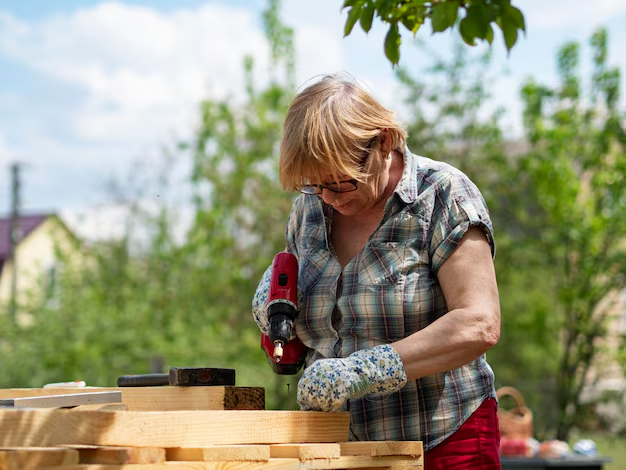
Outdoor Projects: A Practical Guide to Improving the Outside of Your Home
Outdoor projects sit at the crossroads of home improvement, landscaping, and outdoor living. They range from simple weekend tasks, like refreshing mulch, to major undertakings, like building a deck or regrading a yard for drainage.
This guide explains what counts as an outdoor project, how it fits into home improvement as a whole, and which factors usually shape results. It also maps out the main subtopics people tend to explore next, so you can see the full landscape before deciding what might matter for your situation.
Throughout, keep one thing in mind: the “right” outdoor project is highly personal. Climate, budget, physical ability, experience, local rules, long-term plans, and even your tolerance for future maintenance all change what makes sense.
What Counts as an “Outdoor Project” in Home Improvement?
Within home improvement, outdoor projects are changes or additions made to the exterior of a home and its surrounding property. They focus on the space outside the walls of your house, including:
- The building exterior (roof, siding, windows, doors)
- Hard surfaces (driveways, walkways, patios, decks)
- Landscape (plants, soil, grading, lawns, irrigation)
- Outdoor living features (fences, lighting, kitchens, fire pits, play areas)
- Utility and protective features (drainage systems, retaining walls, sheds)
Some outdoor projects are mainly functional (fixing drainage, improving access, reducing slip hazards). Others are mostly aesthetic (new plantings, updated lighting). Many sit in the middle, such as a deck that both changes how your yard looks and how you use it.
This sub-category matters because outdoor work:
- Involves different materials and stresses than indoor projects (UV exposure, moisture, wind, freeze-thaw cycles)
- Is strongly shaped by climate and local conditions
- Often touches property lines, utilities, and local codes
- Can affect water movement, soil stability, and safety in ways that are less obvious than cosmetic indoor updates
Understanding these differences is key before assuming an outdoor project is “just like” an indoor one, only outside.
How Outdoor Projects Work: Key Concepts and Trade-Offs
While each outdoor project is unique, several themes show up across most of them.
Exposure and Durability
Outdoor materials live in a harsher world than indoor ones. Sun, water, temperature swings, and wind gradually break down surfaces and fasteners.
Established building science and engineering research consistently show that for outdoor structures:
- Moisture management (keeping water away from vulnerable areas and letting it drain) is central to long-term durability.
- UV exposure from sunlight degrades many plastics, coatings, and some wood species faster than most people expect.
- Freeze–thaw cycles can crack concrete and stone if water penetrates and then expands when frozen.
- Fasteners and connectors (screws, bolts, brackets) are often the weak points if they corrode or are undersized.
This is why outdoor-grade materials and construction methods are different from indoor ones. These are general patterns, not guarantees; how long anything lasts depends on exact products, installation quality, use, and environment.
Structure, Soil, and Water
Many outdoor projects involve load-bearing elements (decks, retaining walls, pergolas) or soil movement (grading, digging, trenching). Here, the interaction between structure, soil, and water is central.
Research in geotechnical engineering and landscape design generally finds:
- Poor drainage and grading contribute to a significant share of foundation problems, frost heave issues, and retaining wall failures.
- Soil type (clay, silt, sand, loam) affects drainage, compaction, and stability. Clay, for example, expands and contracts more with moisture changes.
- Groundwater and surface water paths are often less intuitive than they look; water can travel long distances through soil layers before surfacing.
For a homeowner, the main takeaway is that outdoor projects that change the way land slopes or holds water can have wide ripple effects—sometimes for neighboring properties as well.
Maintenance Over Time
Most outdoor improvements are not “set it and forget it.” Paint peels, plants grow (or die), joints open, and surfaces weather.
Evidence from housing studies and maintenance cost analyses typically shows:
- Outdoor elements like roofs, decks, and exterior paint have predictable maintenance cycles, but actual lifespans vary widely based on climate and upkeep.
- Neglected small tasks (like clearing gutters or sealing small cracks) often lead to more expensive repairs later.
- Landscape features (lawns vs. native plantings vs. hardscapes) differ greatly in ongoing time and resource demands, especially water use.
How much maintenance you’re willing and able to do over years is often more important than what seems appealing on day one.
Safety and Code Considerations
Outdoor projects often intersect with building codes, zoning rules, and safety standards, especially when structures, electrical work, gas lines, or property lines are involved.
Expert consensus in building safety emphasizes:
- Features like railings, stairs, deck attachments, and pool barriers are frequent points of failure or injury when not designed, built, or maintained properly.
- Electrical work outdoors brings added risks due to water and weather; modern codes require specific protections (such as GFCI outlets and proper burial depth for certain cables).
- Setback requirements and height limits often control where and how large certain outdoor structures can be.
Local requirements vary, and whether something applies depends on your jurisdiction and the size and type of project.
Major Types of Outdoor Projects
Most outdoor work falls into a handful of broad categories. Each comes with its own trade-offs and typical questions.
1. Exterior Repairs and Upgrades
These projects focus on the shell of the house:
- Roofing: Repairing leaks, replacing shingles, adding ventilation.
- Siding and cladding: Replacing or repairing wood, vinyl, fiber cement, stucco, or brick.
- Windows and exterior doors: Updating for weather resistance, security, or appearance.
- Gutters and downspouts: Installing, repairing, or redirecting for better drainage.
Research in building science shows the exterior “envelope” of a house strongly affects moisture control, energy use, and durability. But the right material or approach for one home may be wrong for another, depending on climate, roof shape, existing structure, and cost constraints.
2. Decks, Patios, and Outdoor Living Areas
These projects create spaces where people spend time outdoors:
- Decks: Raised platforms, typically wood or composite, attached or freestanding.
- Patios: Ground-level surfaces made from concrete, pavers, stone, or gravel.
- Porches and pergolas: Covered or partially covered spaces offering shade and shelter.
- Outdoor kitchens and dining areas: Cooking stations, built-in seating, and storage.
Common decisions include:
- Height and layout
- Material (wood vs. composite vs. concrete vs. stone)
- Shade and weather protection
- Railing and stair design
- Integration with the yard and house
Studies on outdoor living spaces suggest they can change how often people use their yards and how they perceive their home’s value, but the extent is individual and depends on lifestyle and design choices.
3. Landscaping, Planting, and Lawns
These projects shape the living parts of your outdoor space:
- Garden beds and borders
- Trees and shrubs
- Lawns and groundcovers
- Mulch, rock, and edging
- Native and drought-tolerant plantings
Landscape research and environmental studies have found:
- Plant choices significantly influence water use, especially in dry climates.
- Native or well-adapted species often require fewer inputs (water, fertilizer, pesticides) once established, compared with many high-maintenance ornamental species.
- Trees, when well-sited, can impact microclimate, shading walls and windows and affecting energy use.
However, what thrives in one yard can fail a few blocks away due to small differences in soil, wind exposure, shade, or care.
4. Fencing, Walls, and Privacy Features
These projects define boundaries and shape privacy:
- Fences: Wood, metal, vinyl, masonry, or living (hedges).
- Retaining walls: Structures that hold back soil to create level areas.
- Screens and trellises: Smaller elements that block views or support climbing plants.
- Sound and wind barriers: Features aimed at reducing noise or wind exposure.
Research in structural engineering shows that wall and fence failures often relate to footing design, drainage, and wind loading—not just surface materials. For homeowners, that translates into careful attention to posts, footings, and water flow, not just appearance.
5. Driveways, Walkways, and Hardscapes
These projects handle access and circulation:
- Driveways: Asphalt, concrete, pavers, gravel, or permeable systems.
- Walkways and steps
- Retaining edges and curbing
- Hardscape accents: Small walls, seating, and planters.
Evidence from stormwater and urban planning studies points out that impervious surfaces (like solid concrete and asphalt) increase runoff, while permeable options can help reduce it. But permeable systems often require different maintenance (for example, keeping pores or joints clear).
6. Drainage, Grading, and Erosion Control
These projects manage how water moves through and across your property:
- Regrading soil to direct surface water away from foundations.
- French drains and other subsurface drainage systems.
- Swales and rain gardens to slow and absorb runoff.
- Erosion control measures on slopes (plantings, mats, terracing).
Hydrology and civil engineering research consistently show that even small grading changes can meaningfully alter runoff patterns and water pooling. Whether that is beneficial or harmful depends entirely on the specifics of the property, soil, and surrounding area.
7. Outdoor Lighting, Power, and Utilities
These projects extend usability and function into evenings and remote corners of a yard:
- Low-voltage landscape lighting
- Hardwired exterior fixtures
- Outdoor outlets and circuits
- Gas and water lines for grills, kitchens, or irrigation
Electrical safety research and building codes highlight that moisture and weather raise the stakes outdoors, which is why weatherproofing, grounding, and proper enclosures are central themes. Local code requirements and utility marking rules usually apply when digging or tying into existing systems.
8. Sheds, Play Structures, and Specialty Features
These projects add specific functions:
- Storage sheds and small outbuildings
- Playsets, swings, and climbing structures
- Pools, spas, and hot tubs
- Fire pits and fireplaces
- Greenhouses and raised beds
These often mix structural concerns (load, anchoring), safety considerations (fall zones, burn and drowning risks), and local rules (setbacks, permits, barriers). Research on injury prevention repeatedly emphasizes design details like fall surfaces, guard heights, and supervision needs, especially for play and water features.
Key Variables That Shape Outdoor Project Outcomes
Two seemingly similar homes can see very different results from the same type of project. The major variables usually include:
Climate and Local Environment
Climate affects almost every outdoor decision:
- Temperature extremes influence material expansion and contraction.
- Rainfall and humidity impact rot, rust, mold, and plant choices.
- Snow and ice add loads to roofs, decks, and railings, and affect slip risk.
- Sun intensity speeds up fading and degradation of many materials.
- Wind exposure stresses fences, roofs, and tall structures.
Research in building durability and climate adaptation shows that materials and designs that perform well in one climate may deteriorate faster in another. That does not mean one is “better” overall; it means “better where and how it’s used.”
Soil, Slope, and Site Conditions
Even within the same city, lots differ:
- Soil type (clay vs. sand vs. loam) changes drainage and stability.
- Slope and elevation affect erosion risk and runoff direction.
- Existing vegetation and root systems can either stabilize or disrupt soil.
- Water table and groundwater can influence how easily areas stay soggy.
Geotechnical research consistently links soil conditions and drainage to the performance of foundations, retaining walls, and pavements. For a homeowner, this often shows up as some yards being “easy” to work with while others are prone to movement, pooling, or cracking.
Home Age, Design, and Condition
The existing structure and layout also matter:
- Older homes may have different framing methods and materials than newer ones.
- Additions and past repairs can create weak points or complex tie-ins for new outdoor work.
- Existing decks, porches, or additions might have unknown structural or moisture issues.
Housing research indicates that older homes often have a mix of materials and techniques from different eras, which can complicate new interfaces at roofs, walls, and foundations.
Budget, Time, and Skill Level
Outdoor projects span a wide range of resource needs:
- Some tasks are tools- and labor-intensive, even if materials are relatively inexpensive.
- Others reverse that pattern, with costly materials but limited labor.
- Your own experience, physical ability, and available time influence whether something is realistic to handle yourself or not.
Studies on DIY home improvement suggest that while many people successfully complete basic outdoor projects, more complex work has higher rates of delays, rework, and cost overruns—especially when structural or code-related elements are involved.
Local Rules, Codes, and Neighborhood Norms
Your location shapes what is allowed or expected:
- Building codes specify minimum standards for safety and performance.
- Zoning rules can restrict structure locations, heights, and uses.
- Homeowners’ associations (HOAs) may set appearance, fencing, or landscaping requirements.
- Historic districts can limit exterior changes to maintain a certain character.
These rules do not predict how you’ll feel about a project, but they can set hard boundaries on what is possible without approvals.
Long-Term Plans and Lifestyle
Your own goals matter as much as technical details:
- How long you expect to stay in the home.
- Whether you want low-maintenance vs. high-touch gardens or features.
- How often you realistically use outdoor spaces for relaxation, play, or entertaining.
- Future plans that might change your needs (children, accessibility needs, working from home, downsizing).
Studies on homeowner satisfaction with renovations often find that alignment with actual daily use patterns is a major driver of long-term contentment, sometimes more than purely financial measures.
Different Profiles, Different Outdoor Paths
It helps to see how the same yard might lead to different choices, depending on who is making them. These are general patterns, not prescriptions.
The Low-Maintenance Seeker
This person prefers:
- Simple plantings
- Durable hardscapes
- Minimal recurring tasks
They might lean toward fewer lawn areas, more perennial plantings suited to their climate, and durable surfaces that require rare, rather than frequent, upkeep. Research on water use and maintenance supports the idea that such landscapes can reduce ongoing inputs, but exact savings vary.
The Avid Gardener
This person enjoys:
- Planting, pruning, and experimenting
- Seasonal color changes
- Growing food, flowers, or both
They might accept higher maintenance in exchange for a dynamic, plant-rich yard. Horticultural research shows that diverse plantings can support pollinators and biodiversity, but this depends heavily on species choices and management practices.
The Outdoor Entertainer
This person focuses on:
- Seating and gathering spaces
- Cooking or dining areas
- Lighting and ambiance
Their projects often emphasize decks, patios, shade structures, and lighting. Studies on outdoor living trends suggest these spaces can change how people use their homes, but whether that matters to you depends on how often you host and what you enjoy.
The Safety- and Access-Focused Owner
This person prioritizes:
- Safe paths and steps
- Good lighting for navigation
- Secure railings and barriers
- Accessibility (ramps, gentle slopes, wider paths)
Research on falls and injuries highlights that surface conditions, lighting, and railings are frequent factors. However, the exact solutions appropriate for any one person depend on specific mobility, vision, and health details.
The Resale-Driven Planner
This person thinks in terms of:
- Broad appeal
- Neighborhood norms
- Perceived value
Housing market research indicates that well-maintained exteriors, functional outdoor spaces, and good curb appeal often correlate with higher buyer interest. Yet, the return on any specific project is highly variable, depending on the local market, timing, quality, and buyer preferences.
Most people combine elements from several of these profiles, and their priorities can shift over time.
Comparing Common Outdoor Approaches
Outdoor decisions often come down to trade-offs. Here is a simplified comparison of a few typical choices:
| Project Type / Option | Typical Strengths (General) | Typical Trade-Offs (General) |
|---|---|---|
| Wood deck | Warm look, adjustable design, repairable in sections | Requires periodic sealing/painting; susceptible to rot and insects |
| Composite deck | Less frequent refinishing; resists rot and insects | Higher upfront cost; can retain heat in strong sun |
| Concrete patio | Stable surface; low daily upkeep | Can crack; repairs can be noticeable; usually impervious to water |
| Paver patio | Flexible design; easier to repair by replacing units | Joints may shift or settle; weeds or moss can appear between pavers |
| Large turf lawn | Familiar look; flexible use (play, pets) | Often high water, fertilizer, and mowing needs, especially in dry areas |
| Mixed planting with natives | Can support biodiversity; may use less water once established | Requires planning and knowledge; appearance changes with seasons |
| Solid privacy fence | Strong visual barrier; clear boundary | Can catch wind; may require more structural support and maintenance |
| Living screen (hedge, plantings) | Softer look; habitat for birds/insects | Takes time to establish; requires pruning and plant care |
These are broad patterns, not guarantees. Specific performance depends on material quality, installation, climate, and maintenance.
Key Subtopics to Explore Within Outdoor Projects
Outdoor projects are broad enough that most people naturally dive deeper into specific questions. This sub-category typically branches into several detailed areas:
Planning and Prioritizing Outdoor Work
Many homeowners start by asking how to plan outdoor improvements over time:
- How to evaluate the current condition of roofs, decks, siding, and landscapes.
- How to think about urgency (for example, leaks and drainage issues vs. cosmetic changes).
- Ways to coordinate projects so that one does not undo another (for instance, planning drainage before investing in new plantings).
Research on housing maintenance points to the benefits of addressing moisture and safety issues early, but the order that makes sense still depends on individual budgets, risk tolerance, and local conditions.
Understanding Outdoor Materials and Lifespans
Another common path is learning more about materials:
- Types of wood, composites, masonry, metals, and plastics used outdoors.
- How sun, water, temperature, and use patterns affect each.
- What “expected lifespan” usually means in practice and how much it can vary.
Construction and materials research provide general ranges for how long various options last under certain conditions, but real-world results depend heavily on installation and care.
Climate-Responsive Yard and Exterior Design
Many readers want to align outdoor projects with their local climate:
- Approaches for hot, dry regions vs. cold, wet ones.
- Strategies to manage heavy rain, flooding risk, or snow loads.
- Planting concepts like drought-tolerant landscapes, rain gardens, or windbreaks.
Environmental and climate research supports the idea that site-specific, climate-appropriate design can improve durability and resource use, though implementation details vary widely with each property.
Drainage, Grading, and Water Management Basics
Because water problems can be costly, people often explore:
- How to recognize signs of poor drainage (standing water, erosion, damp basements).
- Basic principles of grading and surface vs. subsurface water movement.
- Common components of site drainage systems.
Hydrology studies emphasize that small changes to water paths can have big downstream effects, which is why more complex drainage alterations often benefit from professional assessment.
Safety, Codes, and Permits for Outdoor Work
Another frequent set of questions centers on rules and safety:
- When permits are typically required for decks, fences, sheds, and exterior changes.
- Typical code requirements for railings, stair dimensions, and structural attachments.
- Safety considerations for pools, spas, play structures, and fire features.
Building codes and safety research are clear that design details—such as guard heights, accepted fasteners, or required clearances—play a large role in reducing accident and failure risk. Local enforcement and specific requirements, however, differ by jurisdiction.
Landscaping for Function, Beauty, and Ecology
Readers also dig deeper into landscape topics:
- Designing plantings for shade, privacy, habitat, or seasonal interest.
- Considering pollinator-friendly or native plant selections.
- Balancing lawn area with planting beds, trees, and hardscapes.
Ecology and landscape studies support the idea that plant diversity and native species can benefit local ecosystems and, in some cases, reduce resource demands. What works best on a specific property, though, depends on space, soil, maintenance capacity, and aesthetic preferences.
Outdoor Lighting and Nighttime Safety
Finally, many want to understand lighting:
- Types of fixtures and bulbs suited to outdoor use.
- Basics of low-voltage vs. line-voltage systems.
- Placement strategies for both safety and appearance.
Research on lighting and safety suggests that good, glare-controlled illumination at steps, paths, and entry points can help people navigate more safely at night. At the same time, studies on light pollution highlight drawbacks of excessive or poorly directed lighting, so balance is a recurring theme.
Outdoor projects can transform how a property looks, feels, and functions. Established research and expert practice provide a strong backbone of general principles—about water, structure, climate, safety, and maintenance—but they do not replace the specifics of your site, your local rules, your budget, and your own priorities. Those personal factors are the missing pieces that determine which outdoor projects, if any, fit your situation.