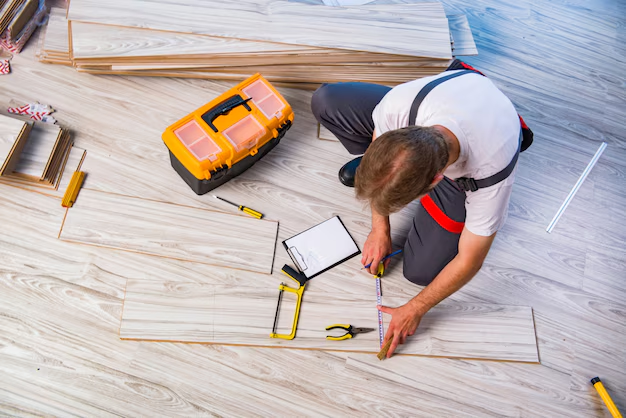
Best Budget Flooring Options for Every Room in Your Home
Picking new flooring on a budget can feel like a game of trade-offs: cost vs. durability, looks vs. maintenance, comfort vs. water resistance. There’s no single “best” choice for everyone, but there are solid, affordable options for every room — if you know what to look for.
This guide breaks down common budget flooring options, how they differ, and what usually works best in each part of the house. It won’t tell you what you should buy, but it will give you the questions and comparisons you need to make a smart call.
What counts as “budget flooring”?
When people say budget flooring, they usually mean:
- Lower material cost compared to hardwood and stone
- Less expensive installation, sometimes even DIY-friendly
- Decent durability, but not necessarily “lifetime” floors
- Good enough appearance for everyday living, even if it’s not high-end
Common budget flooring types include:
- Sheet vinyl
- Luxury vinyl plank (LVP) and tile (LVT)
- Laminate
- Ceramic tile (basic lines)
- Engineered wood (entry-level)
- Carpet (especially roll/broadloom)
- Peel-and-stick tiles/planks
- Painted or refinished existing floors
Prices vary a lot by region, brand, and installation method. What stays consistent is the trade-off pattern: the cheaper you go, the more you usually give up in longevity, comfort, or appearance.
Key factors that affect which budget flooring makes sense
Before diving into rooms, it helps to know what typically influences the “right” budget option:
Moisture level
- High moisture (bathrooms, laundry, basements) needs water-resistant or waterproof floors.
- Dry areas (bedrooms, offices) can use almost any type.
Foot traffic
- High traffic (hallways, kitchens, entryways) needs tough, scratch- and wear-resistant surfaces.
- Low traffic (guest rooms, formal dining rooms) can handle more delicate materials.
Comfort underfoot
- Standing a lot? Look for softer or resilient surfaces (vinyl, cork, carpet).
- Harder floors (ceramic tile, some laminates) may feel tough on feet and joints.
Maintenance and cleaning
- Some floors just need sweeping and mopping.
- Others need special cleaners, resealing, or more careful care around water.
DIY vs. professional installation
- Click-together laminates, LVP, and some engineered wood are designed for DIY.
- Tile, carpet stretching, and some sheet vinyl typically need pros.
Existing subfloor
- Concrete vs. wood, level vs. uneven, smooth vs. damaged — this changes what’s practical.
- Some products float over the old floor; others require glue or nails.
How long you plan to stay
- Short-term (1–3 years): You might prioritize low upfront cost over long lifespan.
- Long-term: Spending a bit more for durability can be cheaper over time.
Noise and insulation
- Multi-level homes and apartments often care more about sound and warmth underfoot.
Once you know your room’s moisture level, traffic, comfort needs, and how long you expect the floor to last, choosing a budget option becomes more like following a map than guessing.
Quick comparison: common budget flooring types
| Flooring Type | Best For | Not Ideal For | Main Pros | Main Cons |
|---|---|---|---|---|
| Sheet Vinyl | Kitchens, baths, laundry, rentals | High-end look goals | Waterproof, cheap, easy to clean | Can dent/tear, seams can show |
| LVP/LVT (vinyl plank/tile) | Most rooms, basements | Very uneven floors | Water-resistant, realistic look, DIY | Quality varies, not repairable like wood |
| Laminate | Living rooms, bedrooms, hallways | Wet rooms (unless special type) | Scratch-resistant, wood-like look | Doesn’t love water, can be noisy |
| Basic Ceramic Tile | Baths, laundry, some kitchens | Bedrooms, long standing areas | Waterproof, long-lasting | Hard, cold, more complex install |
| Engineered Wood (budget lines) | Living rooms, bedrooms, dining | Wet areas, very high traffic entries | Real wood veneer, warmer look | Limited refinish, can be moisture-sensitive |
| Carpet (broadloom) | Bedrooms, family rooms, stairs | Kitchens, baths, damp basements | Soft, quiet, budget-friendly lines | Stains, wears in traffic paths |
| Peel-and-Stick Tile/Plank | Low-budget updates, rentals | Very wet areas, heavy use kitchens | Very cheap, easy to install, removable | Shorter lifespan, can lift at edges |
| Painted/Refinished Existing Floor | Basements, porches, utility | Extremely damaged surfaces | Lowest material cost, customizable look | Prep-heavy, shows imperfections |
Best budget flooring options by room
Living room and family room: balancing comfort and durability
What these rooms usually need:
- Handles moderate to heavy foot traffic
- Looks good — often a “show” space
- Comfortable and not icy-cold underfoot
- Easy to clean up daily dust and spills
Common budget choices:
Luxury Vinyl Plank (LVP)
- Why people choose it: Looks similar to wood, usually more budget-friendly than real hardwood, and handles daily life well.
- Good fit if: You want something kid- and pet-friendly, expect occasional spills, and like a wood look.
Laminate
- Why people choose it: Often slightly cheaper than mid-range LVP, good scratch resistance, lots of styles.
- Good fit if: You don’t expect many liquid spills, want a wood-look floor on a tight budget, and are okay with a slightly harder feel.
Budget Engineered Wood
- Why people choose it: Real wood veneer gives a warmer, more natural look than many synthetics.
- Good fit if: You want real wood but can’t justify solid hardwood prices, and your living room is relatively dry and not a mudroom.
Carpet (wall-to-wall)
- Why people choose it: Soft, warm, quieter, and often one of the lowest costs upfront.
- Good fit if: Comfort and sound reduction matter more than spill-proof performance, and you don’t mind periodic deep cleaning.
Key variables for you to consider:
- Do you eat in the living room?
- Do you have pets with claws and the occasional accident?
- Is this a main throughway from the front door?
If spills and mud are common, LVP or laminate with good water resistance usually hold up better than carpet or low-end engineered wood.
Bedroom: comfort and warmth on a budget
What bedrooms usually need:
- Comfort under bare feet
- Quiet when walking
- Moderate wear — usually lower traffic than main living areas
Common budget choices:
Carpet
- Why it’s popular: Soft, warm, muffles sound — especially helpful in upstairs bedrooms.
- Good fit if: You value coziness, don’t have major allergy concerns, and are okay with regular vacuuming and occasional deep cleans.
Laminate or LVP + Area Rugs
- Why people choose it: Easier to clean than carpet, with the option to add warmth and style with rugs.
- Good fit if: You have allergies, pets, or want a surface that’s easier to keep spotless.
Budget Engineered Wood
- Why people choose it: Offers a more traditional, warm look than many synthetic floors.
- Good fit if: You’re pairing it with rugs and want a more “timeless” look without top-tier hardwood prices.
Key variables for you to consider:
- Allergies to dust and dander
- Pet access to bedrooms
- Whether you prefer soft, cushioned floors vs. easier cleaning
Bedrooms are one place where even very budget carpet can make sense if you’re okay with replacing it more frequently than a hard floor.
Kitchen: durable, easy to clean, and water-aware
What kitchens usually need:
- High resistance to spills, splashes, and dropped items
- Easy to clean grease and food
- Comfort for long periods of standing
- Handles heavy traffic
Common budget choices:
Luxury Vinyl Plank or Tile (LVP/LVT)
- Why it’s popular: Water-resistant enough for everyday kitchen spills, softer than tile, and easy to clean.
- Good fit if: You want a wood or stone look with less worry about water.
Sheet Vinyl
- Why people choose it: Often one of the cheapest kitchen flooring options, with very few seams if installed carefully.
- Good fit if: You want low cost, low maintenance, and aren’t chasing a high-end look.
Basic Ceramic or Porcelain Tile
- Why people choose it: Very durable and truly waterproof at the surface.
- Good fit if: You care more about longevity and water resistance than softness, and you’re okay with colder, harder floors (rugs or mats help).
Less common in the kitchen:
- Laminate: Some types don’t handle standing water well. There are more water-resistant versions, but you’d need to read specs carefully.
- Carpet: Generally avoided due to spills and grease.
Key variables for you to consider:
- How often do spills and splashes happen?
- Are you okay with a harder, colder floor if it lasts longer?
- Do you cook daily or just occasionally?
Kitchens usually reward spending a bit more on durability, because this room tends to see more use and abuse than most others.
Bathroom: moisture is the main boss 🚿
What bathrooms usually need:
- High resistance to water, humidity, and splashes
- Protection at seams and edges
- Easy cleaning for soaps, hair products, and more
Common budget choices:
Sheet Vinyl
- Why it’s popular: Few seams and good water resistance when installed correctly.
- Good fit if: You want an affordable, low-fuss waterproof surface.
Luxury Vinyl Tile/Plank (rated for wet areas)
- Why people choose it: More design choices, including wood and stone looks, with water-resistant construction.
- Good fit if: You like the look of wood but need the practicality of vinyl.
Ceramic or Porcelain Tile
- Why people choose it: Classic bathroom favorite, handles water and steam well.
- Good fit if: You want a long-lasting surface and are okay with a harder, colder feel and grouted joints to clean.
Generally poor fits for typical bathrooms:
- Standard laminate
- Carpet
- Most engineered wood
The main exception is if you’re dealing with a half-bath (no shower) and very careful water habits — but many people still prefer water-resistant options there.
Key variables for you to consider:
- Full bath vs. half bath
- How often kids splash or water escapes the shower
- Will you add bath mats for warmth and slip resistance?
Bathrooms are where “waterproof” claims really matter — reading the manufacturer’s recommendations for wet areas is crucial.
Entryway and mudroom: dirt, water, and heavy wear
What these areas usually need:
- High durability against grit, mud, and water
- A surface that doesn’t mind wet shoes and salt (in snowy areas)
- Easy to mop and sweep
Common budget choices:
Ceramic or Porcelain Tile
- Why it’s popular: Stands up to heavy wear and water, good for snowy or rainy climates.
- Good fit if: You want a tough, long-term solution and can handle the hard surface underfoot.
Luxury Vinyl (LVP/LVT)
- Why people choose it: Handles water reasonably well, easier on feet than tile, and easier DIY.
- Good fit if: You like a wood look but don’t want it to be the first thing destroyed by wet boots.
Sheet Vinyl
- Why people choose it: Low-cost, water-resistant, and simple to clean.
- Good fit if: You’re prioritizing budget and easy maintenance.
Key variables for you to consider:
- Climate (wet, snowy, or mostly dry)
- Whether this is the main entry vs. a secondary back door
- How tough you need the floor to be vs. how soft you want it to feel
In many homes, entryways are where people splurge on durability, because this is often the first impression of the house and the area that sees the most abuse.
Basement: moisture, temperature, and subfloor challenges
What basements usually need:
- Flexibility around moisture and temperature swings
- Compatibility with concrete subfloors
- Material that won’t easily warp from dampness
Common budget choices:
Luxury Vinyl Plank or Tile
- Why it’s popular: Designed to lay over concrete, often water-resistant, and comfortable enough for finished basement living spaces.
- Good fit if: Your basement is mostly dry but you want peace of mind around humidity.
Sheet Vinyl
- Why people choose it: Very budget-friendly and compatible with concrete.
- Good fit if: You want a simple, practical surface for a rec room, exercise space, or laundry area.
Carpet Tiles or Area Rugs over a Hard Surface
- Why people choose it: Tiles or rugs can be replaced section by section if there’s a minor water issue.
- Good fit if: You want warmth and softness but have some concern about future leaks.
Painted Concrete or Epoxy
- Why people choose it: Very budget-conscious; seals and colors the existing slab.
- Good fit if: You’re okay with an industrial or casual look and want low material costs.
Generally riskier in basements:
- Solid wood and many engineered wood products
- Standard laminate (unless specifically rated for basement use and proper moisture control is in place)
Key variables for you to consider:
- History of leaks, seepage, or dampness
- Whether the basement is fully finished or semi-finished/storage
- Desire for warmth underfoot vs. simplicity and moisture resilience
Basements often benefit from a layered approach: a moisture-tolerant hard floor, plus rugs for comfort in seating areas.
Laundry room: spills, leaks, and appliances
What laundry rooms usually need:
- Resistance to occasional leaks and drips
- Durability under heavy machines
- A surface that’s easy to wipe clean
Common budget choices:
Sheet Vinyl
- Why it’s popular: Continues to be a go-to for utility spaces due to water resistance and low cost.
- Good fit if: You want something you can install once and not worry much about.
Luxury Vinyl Tile/Plank
- Why people choose it: More design options, stands up to day-to-day moisture.
- Good fit if: The laundry is part of or near finished living space and you care about how it looks.
Ceramic/Porcelain Tile
- Why people choose it: Very durable, waterproof surface.
- Good fit if: You don’t mind a harder floor and want long-term performance.
Key variables for you to consider:
- Whether your laundry is in a basement vs. main floor
- Past history of leaks or overflows
- If the room doubles as a mudroom or storage
Here, water resistance tends to matter more than style for many people, especially in secondary spaces.
How to decide between two or three flooring options
When you’ve narrowed things down but can’t pick, it helps to line them up by what matters most to you. For example:
| Priority | Option A: LVP | Option B: Laminate | Option C: Carpet |
|---|---|---|---|
| Water resistance | Better | Usually weaker | Weaker |
| Comfort underfoot | Medium | Medium-hard | Softest |
| Cleaning | Easy (mop, sweep) | Easy, but avoid water | Needs vacuum, stains easier |
| Noise | Quieter with underlayment | Can be loud without padding | Quietest |
| Look (wood-style) | Usually quite good | Often good | No wood look |
| Upfront cost (general) | Often mid in budget range | Often low–mid | Often low–mid |
You can build a simple table like this for any set of options and weigh them against what matters in your home: water, comfort, appearance, longevity, or cost.
Questions to ask before you commit to a budget floor
To match the general guidance here to your specific space, it helps to answer a few clear questions:
What’s the moisture situation in this room?
- Ever had leaks, flooding, or condensation?
- Is it above grade or below grade (like a basement)?
How much traffic does this floor get?
- Is it a hallway everyone walks through daily, or a guest room used twice a year?
Who uses this room?
- Kids, elderly family members, pets, frequent guests?
How long do you plan to live with this floor?
- Short-term stopgap vs. longer-term solution.
Are you open to DIY installation?
- If yes, some options become far more budget-effective.
How important is appearance compared to cost and durability?
- Are you okay with ���decent but not fancy,” or do you want something that looks close to premium?
What’s under your existing floor?
- Concrete, plywood, old tile, or another material can change installation options.
Once you know your own answers, you can match them to the patterns in this guide:
- High moisture + high traffic → vinyl or tile are usually strongest.
- Low moisture + comfort priority → carpet or vinyl with rugs.
- Want wood look on a budget, low moisture → laminate, LVP, or entry-level engineered wood.
- Short-term fix → peel-and-stick, painted floors, or basic sheet vinyl can play a role.
There isn’t a single best budget flooring for every room in every home — but there is usually a short list that fits your mix of moisture, traffic, comfort, and cost. This overview is your map to that shorter, more manageable list.