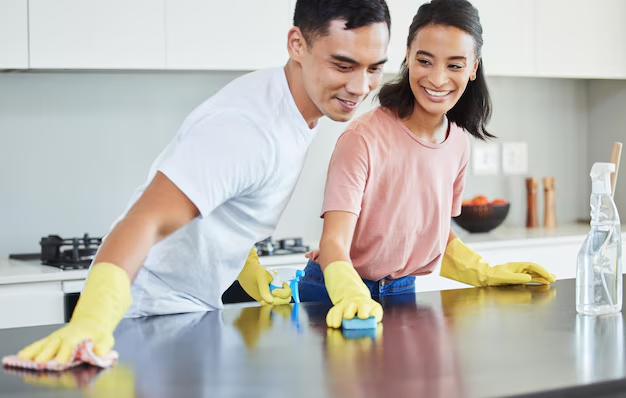
Deep Cleaning: An In-Depth Guide to Going Beyond Everyday Tidying
Deep cleaning sits in a specific corner of the broader Cleaning & Organization world. It is more than wiping counters or picking up clutter, but it is also different from full-scale renovation or restoration work. This page walks through what “deep cleaning” usually means, why the definition is not the same for everyone, and how different choices and constraints shape what people actually do in their homes or workplaces.
Throughout, keep in mind: research and expert guidance can describe general patterns. They cannot tell you exactly what is right for your particular health needs, budget, building, or schedule.
What “Deep Cleaning” Actually Means
In everyday language, deep cleaning usually refers to:
A more thorough, less frequent cleaning that targets hidden, built-up, or hard-to-reach dirt, residues, and contaminants that regular cleaning leaves behind.
Where routine cleaning focuses on visible surfaces (like a quick vacuum or wipe-down), deep cleaning typically includes:
- Moving or emptying furniture and appliances
- Scrubbing grout, baseboards, trim, and crevices
- Degreasing kitchen surfaces and vents
- Washing walls, doors, and interior windows
- Cleaning inside appliances (fridge, oven, dishwasher, washing machine)
- Addressing buildup in bathrooms (scale, soap scum, mold/mildew)
Within Cleaning & Organization, deep cleaning is one layer among others:
- Decluttering / organization: managing how much you own and where it lives
- Routine cleaning: regular upkeep (daily/weekly tasks)
- Deep cleaning: periodic, more intensive work
- Specialized remediation: mold remediation, pest control, lead/asbestos abatement, water damage restoration
Deep cleaning is the bridge between light, cosmetic cleaning and specialist-level work. This distinction matters because:
- The time and effort required are higher.
- The types of contaminants may be different (old grease vs. light dust).
- Some tasks walk the line between “DIY clean” and “needs a specialist,” especially with mold, pests, or indoor air concerns.
There is no universal checklist that applies to every home or office. What counts as “deep” depends on the building, local climate, how many people (or pets) live there, and how space is used.
How Deep Cleaning Works at a Practical Level
Deep cleaning is less about one magic product and more about process. The same basic mechanics show up across rooms and surfaces.
1. Soil and contaminant removal
Most deep cleaning comes down to removing different “soils”:
- Loose dry soils: dust, crumbs, pet hair
- Oily/greasy soils: kitchen grease, skin oils on handles and switches
- Mineral deposits: limescale, hard-water stains
- Biological films: soap scum, mildew, biofilms in damp areas
Research in building hygiene and environmental health generally finds that mechanical action (scrubbing, brushing, agitation) plus an appropriate cleaning agent is more effective than either alone. The cleaning agent softens or dissolves the soil; physical action dislodges it.
How it works in practice:
- Pre-treat: Allow a cleaner or simple detergent solution to sit on the surface so it can start breaking down soils.
- Agitate: Scrub with a brush, cloth, or pad suited to the material.
- Rinse or wipe away: Remove loosened debris so it does not dry back onto the surface.
- Dry: Reduce moisture left behind, which can otherwise support microbial growth.
The exact tools and formulas vary, but the basic sequence tends to be similar.
2. Contact time and chemistry
Many deep cleaning tasks depend on contact time. Studies on cleaning and disinfection in healthcare and foodservice settings show that both cleanliness and microbe reduction depend not just on what you use, but how long it stays in contact with the soil and surface.
General points from this body of research:
- Detergent-based cleaners often need time to penetrate grease or soap scum.
- Disinfectant products (when used) usually specify a “dwell time” to achieve stated reductions in bacteria or viruses.
- Rinsing too soon or diluting too much can reduce effectiveness.
For home or office deep cleaning, that does not mean copying hospital-level protocols. It does mean that “spray and immediately wipe” may not match what evidence suggests is most effective for built-up grime.
3. From visible dirt to less visible exposures
Deep cleaning has both cosmetic and hygiene dimensions:
- Cosmetic: A floor looks cleaner when ingrained dirt is removed from grout.
- Hygiene: A bathroom may also have lower levels of microbial contamination on high-touch surfaces after thorough cleaning.
Environmental health research, though often focused on workplaces, hospitals, and schools, generally shows:
- High-touch surfaces (handles, switches, railings, shared equipment) can carry microbes between people.
- Regular, effective cleaning can reduce surface contamination, though the link to illness risk in homes is complex and depends on many other factors (like handwashing, ventilation, and who lives there).
- Overuse or misuse of harsh disinfectants can have drawbacks, such as skin irritation, respiratory irritation, or environmental impacts.
For deep cleaning, many experts emphasize cleaning thoroughly first (physically removing soils) and using disinfectants mainly where they are specifically needed, rather than treating every task as a disinfection task.
4. Deep cleaning vs. disinfection vs. sanitizing
These terms are often blurred in everyday use, but they are not the same:
- Cleaning: Removes dirt, dust, and many microbes from surfaces, usually with detergent and water.
- Sanitizing: Reduces (but does not necessarily eliminate) certain microbes to levels considered acceptable by public health standards in specific settings, such as food preparation areas.
- Disinfecting: Uses chemicals to kill a higher percentage of targeted germs on surfaces, under defined conditions.
Deep cleaning usually focuses on cleaning thoroughly and consistently. Sanitizing or disinfecting may be part of it, especially on bathroom and kitchen surfaces, but “deep cleaning” is not automatically the same as “heavy disinfection.”
Key Variables That Shape Deep Cleaning Decisions
Two homes might both say they did a “full deep clean” yet involve completely different tasks. Several variables drive these differences.
1. Type of space and its uses
- Homes vs. workplaces: Offices, schools, and commercial spaces may follow standards influenced by occupational health, regulations, or industry guidelines. Homes usually operate on personal preference and comfort.
- High-traffic vs. low-traffic areas: Entryways, kitchens, bathrooms, and playrooms often need deeper attention more often than guest rooms or storage spaces.
- Special-use areas: Home workshops, home gyms, or pet areas can have their own soil types (sawdust, rubber crumb, pet dander) that shape deep cleaning choices.
2. People, pets, and health considerations
Deep cleaning frequency, products, and focus often change when:
- There are young children who spend time close to floors and surfaces.
- Household members have asthma, allergies, or chemical sensitivities.
- There are pets, especially those that shed heavily.
- Someone has a weakened immune system or chronic health condition.
Indoor air quality research and allergy studies generally find:
- Dust can carry allergens (like dust mite particles, pet dander, pollen) and other contaminants.
- More thorough dust removal and better capture (for example, with effective filtration) can reduce allergen levels on surfaces and in the air.
- Fragrances and certain cleaning chemicals may trigger symptoms in some sensitive individuals.
These findings are broad and do not predict what will happen for any one person, but they help explain why some households choose to adjust how and what they deep clean.
3. Building age, materials, and condition
A newer apartment in a dry climate and a 100-year-old house in a damp climate can have very different deep cleaning needs:
- Older buildings may have more cracks, gaps, and texture that collect dust and debris.
- Moist or poorly ventilated spaces can be more prone to condensation, mildew, or mold growth.
- Certain materials—like unsealed stone or old grout—can be more porous, holding stains and soils more stubbornly.
Researchers in building science and indoor environmental quality often highlight the role of moisture control and surface materials in how contaminants build up and how hard they are to remove. Deep cleaning in a damp basement, for instance, raises different questions than deep cleaning a sunny, well-ventilated bedroom.
4. Time, budget, and physical ability
What is realistic will vary:
- Some people may have a full day to devote to deep cleaning once a month.
- Others may only have small pockets of time and break tasks into short sessions.
- Physical limitations, chronic pain, or mobility issues can make certain tasks (like getting on ladders or moving heavy furniture) difficult or unsafe.
In practice, deep cleaning often becomes a set of prioritized tasks rather than a complete “all at once” overhaul. The evidence does not say there is one correct schedule; the main pattern is that consistency and suitability to the person’s situation matter more than a rigid calendar.
5. Tools and technical know-how
Results can differ based on:
- Whether surfaces are vacuumed, swept, or mopped, and with what attachments or heads
- Vacuum filtration level (for example, how fine the filter is and whether it captures small particles effectively)
- Whether microfiber cloths, traditional rags, or disposable wipes are used
- Knowledge of how to prevent damage (for example, not using abrasive tools on soft finishes)
Cleaning science research (much of it in institutional settings) often finds that method matters more than intensity alone. For instance:
- Microfiber, when used correctly, can remove fine particles and microbes more effectively than some traditional materials.
- Wiping patterns and coverage (not just speed) affect how much soil is actually removed.
Again, these findings do not dictate household rules but give context to why some methods seem more effective than others.
The Spectrum of Deep Cleaning: From “Good Enough” to Intensive Overhaul
Deep cleaning is not a single standard; it exists on a spectrum, and where someone lands on it depends on their needs and resources.
Occasional refresh
At one end of the spectrum is the light deep clean, often done a few times a year:
- Pulling furniture away from walls to vacuum behind and under
- Washing baseboards and doorframes
- Cleaning interior windows and window tracks
- Wiping cabinet fronts and hardware
This level mainly addresses dust, cobwebs, and light buildup that regular cleaning misses. For many people, especially in smaller or newer spaces, this may feel sufficient.
Seasonal or “spring cleaning”
In the middle is a more comprehensive seasonal deep clean, which may happen once or twice a year:
- Emptying and wiping inside cabinets and drawers
- Cleaning inside the fridge, freezer, oven, or dishwasher
- Washing or vacuuming upholstery and draperies (as appropriate to the material)
- Vacuuming mattresses and under beds
- Detailed bathroom work: grout scrubbing, descaling fixtures, cleaning shower doors and tracks
This level can be more intensive, aiming to address built-up grime and residues and to reset the space. Research on allergens and dust in homes suggests that more thorough periodic cleaning like this can reduce certain allergen loads in some environments, though results vary widely between households.
Targeted problem-solving deep clean
Further along the spectrum is issue-driven deep cleaning, where a specific concern prompts extra effort:
- A pest problem leading to detailed kitchen and pantry cleaning
- Water intrusion or leaks leading to cleaning and drying of affected areas
- A smoke event (cooking fire, nearby wildfire smoke infiltration) requiring more thorough cleaning of surfaces and fabrics
- Noticing visible mold on surfaces and deciding how much cleaning vs. professional remediation is appropriate
Here, deep cleaning intersects with health, safety, and building integrity. Some situations may be manageable with careful cleaning and moisture control, while others may be better handled by professionals—especially where structural damage, extensive mold, or contaminants like sewage are involved. Public health and environmental agencies often publish guidance that distinguishes between small, manageable issues and larger hazards that call for specialized care.
Post-event or move-level overhaul
At the far end is an extensive overhaul often associated with:
- Moving into or out of a home
- Major renovation or post-construction cleanup
- After large gatherings, long vacancies, or heavy use
Tasks might include:
- Cleaning walls, ceilings, and light fixtures
- Deep cleaning behind built-ins (where accessible)
- Detailed floor care (washing, refinishing preparations)
- Intensive dust removal after construction dust or sanding
This level can blur into professional cleaning or restoration services. Evidence on health outcomes is more limited here, but building science and hygiene perspectives agree that construction dust and similar fine particles can linger and may be more thoroughly removed with careful techniques and, in some cases, specialized equipment.
Comparing Different Approaches to Deep Cleaning
There is no single “correct” approach. Each method has trade-offs that people weigh based on their priorities and constraints.
Approaches in everyday deep cleaning
| Approach focus | Typical features | Common advantages | Common trade-offs / considerations |
|---|---|---|---|
| Thorough DIY | Self-planned, done with household tools and supplies | Flexible schedule, cost control, personal control over details | Time- and labor-intensive; learning curve for methods and surfaces |
| Incremental / zone-based | Dividing deep cleaning into small areas or tasks over weeks or months | More manageable with busy schedules; less exhausting | Harder to see a “whole-home reset”; needs planning to avoid missed areas |
| Checklist-based | Following a fixed list of tasks for each room | Helpful for consistency and memory; useful for sharing tasks | May not fit unusual spaces or priorities; can feel rigid |
| Health- or allergy-focused | Extra attention to dust, fabrics, and ventilation | May help reduce some allergen exposures in certain situations | May require more frequent washing or vacuuming, and careful product choice |
| Aesthetic / detail-focused | Emphasis on appearance: grout whitening, streak-free glass, polished fixtures | Visually noticeable results | Effort may center more on looks than on less visible hygiene factors |
Research does not clearly show that one general household deep cleaning style is “best.” Instead, outcomes depend heavily on local conditions and on specific health or comfort goals.
Room-by-Room Deep Cleaning: Key Questions and Nuances
Because this is a hub page, the goal here is to map the kinds of questions people ask when they look more closely, not to give step-by-step instructions for each task.
Kitchens: Grease, food residues, and hidden surfaces
Kitchens combine food handling, moisture, and heat, so deep cleaning often centers on:
- Inside and under appliances: fridge coils, oven interiors and racks, microwave ceilings, toaster crumb trays
- Range hoods and filters: grease buildup that regular wiping misses
- Cabinets and drawers: crumbs, oils around handles, sticky residues
- Backsplashes and grout: splatters and grease films
Food safety research in home kitchens generally finds that:
- Areas near sinks, cutting boards, and handles can harbor microbes.
- Soil (food residues, grease) can protect microbes and make disinfectants less effective until surfaces are actually cleaned.
For deep cleaning, important questions include:
- How often do spills or splatters happen?
- Are there signs of pests (droppings, gnaw marks, insect trails)?
- How is ventilation working when cooking, and is grease accumulating on nearby surfaces?
These shape how extensive kitchen deep cleaning might need to be.
Bathrooms: Moisture, scale, and microbial buildup
Bathrooms bring together water, humidity, soaps, and organic matter, so deep cleaning often targets:
- Grout, caulking, and corners where mildew can appear
- Shower doors and curtains, which can accumulate soap scum and mineral deposits
- Faucets and showerheads with limescale or buildup
- Behind toilets, under sinks, and other tight spaces
Research on bathrooms in homes and public settings generally notes:
- Moist surfaces can support microbial growth, including mold and bacteria, especially when ventilation is weak.
- Effective cleaning and drying can reduce surface contamination, though complete sterilization is neither realistic nor necessary in homes.
Key variables include:
- How well the bathroom ventilates (fan use, windows, humidity levels)
- Water hardness (more mineral deposits to manage)
- Visible signs like recurring mildew, peeling caulk, or staining
These factors influence what bathroom deep cleaning looks like in practice and how often people feel it is needed.
Bedrooms and living areas: Dust, fabrics, and air quality
Deep cleaning in these spaces usually focuses on dust and fabrics, which can collect:
- Fine particles and allergens
- Skin flakes and pet dander
- Pollen and outdoor particles brought in on clothing or shoes
Tasks might include:
- Vacuuming upholstery and mattresses
- Washing or cleaning curtains, cushion covers, and throws (as fabric care allows)
- Detailed dusting of shelves, vents, fan blades, and baseboards
- Moving furniture to clean underneath and behind
Allergy and indoor air studies broadly suggest that:
- Dust can act as a reservoir for allergens and other contaminants.
- Thorough and regular removal of settled dust, especially in sleeping areas, may help some people with allergies or asthma, while others may notice little change.
- The type of flooring and how it is cleaned can influence how dust behaves, although findings vary and depend on many factors (cleaning frequency, vacuum type, humidity, occupant behavior).
Deep cleaning decisions in these rooms often revolve around comfort, sleep quality, and symptom patterns for people who are sensitive.
Entryways, hallways, and “traffic lanes”
These high-traffic areas tend to show:
- Ground-in dirt on floors and rugs
- Scuff marks on walls and baseboards
- Heavy dust and grit near doors
In many households, focusing deep cleaning on entry points can change how much dirt travels deeper into the space. Floor-care research in workplaces supports the idea that effective entry matting and regular cleaning reduce soil tracked indoors, though home settings are more varied.
Questions people often consider include:
- Are shoes worn indoors?
- How many people and pets come through daily?
- Is there storage for coats, bags, and outdoor gear near entries?
These shape how intensive deep cleaning of entry areas needs to be and how often.
Planning Deep Cleaning Over Time: Frequency, Triggers, and Trade-offs
There is no evidence-based calendar that applies to all spaces. Instead, research and expert opinions tend to converge around principles rather than rules.
Frequency: What research can and cannot say
Available research on cleaning frequency in homes is limited and often observational. It suggests:
- There is wide variation in how often households deep clean, influenced by culture, habits, and perceived needs.
- More frequent cleaning can reduce visible dirt and certain contaminants, but the relationship with actual health outcomes is complex.
- Both under-cleaning and overuse of harsh chemicals may carry trade-offs.
Because of this, most public health advice sticks to general guidance, such as focusing attention on:
- High-touch surfaces during illness season or if someone is sick
- Moisture-prone areas to reduce mold and mildew risks
- Food-contact surfaces in kitchens
Deep cleaning tends to be framed as periodic and situational rather than on a fixed weekly or monthly schedule.
Triggers for a deep clean
Many people move from routine cleaning to deep cleaning when they notice:
- Visible buildup (grime, scale, or stains that regular cleaning leaves behind)
- Increased dust in corners, vents, or along baseboards
- Odors that persist despite normal cleaning
- Specific events (moving, renovations, pests, water leaks, or illness)
Building and health guidance often emphasize responding to concrete signs (like visible mold, dampness, pest traces) rather than waiting for a calendar reminder.
Trade-offs: Perfection vs. sustainability
Trying to deep clean constantly can be unsustainable physically, financially, and emotionally. Some common trade-offs:
- Intensity vs. consistency: A lighter but more sustainable deep cleaning routine may be more realistic over time than rare, exhausting marathons.
- Scope vs. time: Some people focus a deep clean on a few critical rooms (kitchen, bathrooms, bedroom) and accept a lighter approach elsewhere.
- Detail vs. safety: Certain tasks, like climbing ladders or moving large furniture, can carry physical risk for some individuals and may require extra caution or assistance.
Evidence does not clearly favor an “all or nothing” approach. Instead, many experts frame deep cleaning as prioritized effort, guided by each household’s health needs, usage patterns, and capacity.
Common Terms in Deep Cleaning
Understanding a few recurring terms can help make more sense of guides and labels:
- Soil: In cleaning science, any unwanted matter on a surface—dust, grease, soap scum, or mineral deposits.
- Biofilm: A thin layer of microorganisms that can attach to surfaces, often in damp areas; certain bathroom and kitchen residues can act like simple biofilms.
- Dwell time / contact time: How long a cleaner or disinfectant must stay wet on a surface to work as intended.
- Agitation: The physical scrubbing, brushing, or movement that helps remove soil from surfaces.
- Porous vs. nonporous surfaces: Porous surfaces (like unfinished wood or some stones) can absorb liquids, while nonporous surfaces (like glazed tile or sealed countertops) do not absorb much.
These concepts appear frequently in professional guidance and give a framework for why some deep cleaning tasks are simple while others are stubborn.
Where People Often Go Next: Key Deep Cleaning Subtopics
Deep cleaning is a broad subject. From here, readers naturally tend to branch into more specific questions. Common subtopics include:
- Room-specific deep cleaning guides: Kitchens, bathrooms, bedrooms, living rooms, entryways, basements, and garages each raise their own concerns about moisture, grime, and storage.
- Flooring-focused deep cleaning: Approaches differ for carpet, hardwood, laminate, tile, stone, and vinyl; each material tolerates different methods and has different soil patterns.
- Dealing with moisture, mold, and mildew: Understanding when light cleaning may be enough and when moisture problems may need building repairs or specialist input.
- Deep cleaning for allergy and asthma management: Looking at where dust and allergens tend to accumulate, and how cleaning, filtration, and textiles interact.
- Post-construction or renovation cleanup: Handling fine dust, paint splatters, and residues that routine cleaning does not address.
- Move-in and move-out deep cleaning: What people often focus on when preparing a home to leave or making a new place feel reset.
- Time- and energy-saving approaches: Breaking deep cleaning into small tasks, choosing methods that match physical abilities, and planning realistic routines.
- Environmental and health considerations: How product ingredients, ventilation, and personal sensitivities fit into deep cleaning decisions.
Each of these areas involves its own trade-offs and, in some cases, its own research. Which path matters most will depend on your space, the people and animals who live or work in it, and what you are trying to improve—appearance, comfort, health, or all three.
Your own circumstances—health conditions, building type, local climate, time, energy, and budget—fill in the gap between these general patterns and what makes sense in your daily life.