Essential Fall Lawn Care Tips To Do Every Year
Fall is one of the best times of year to help your lawn recover from summer stress and prepare for winter. The exact steps that make sense for you depend on your grass type, climate, soil, and how “perfect” you want your yard to look. But there are some basic fall lawn care habits that many homeowners repeat year after year.
This guide walks through those core fall lawn care tips, explains why they matter, and shows how different situations call for different approaches.
Why Fall Lawn Care Matters So Much
Fall is a “reset” season for many lawns:
- Cool-season grasses (like Kentucky bluegrass, ryegrass, fescues) do most of their growing in spring and fall.
- Warm-season grasses (like Bermuda, Zoysia, St. Augustine) start slowing down, then go dormant as temperatures drop.
In fall, conditions are often cooler and wetter, which is easier on grass roots and tougher on many weeds. That makes it a smart time to:
- Repair damage from heat, drought, and foot traffic
- Thicken thin or patchy areas
- Improve soil health before winter
- Set up a greener, denser lawn next spring 🌱
The exact timing depends on your region and climate, not the calendar. For many areas, “fall lawn care” happens from late summer through late fall.
Step 1: Keep Mowing — But Adjust Your Approach
Many people stop mowing too early in fall. In most climates, you keep mowing until growth naturally slows or stops.
General mowing guidelines in fall
- Don’t let grass get overly tall. Tall, floppy grass is more prone to matting, snow mold, and disease.
- Avoid scalping. Cutting too short weakens roots and exposes soil to weeds.
- Keep mower blades sharp. Dull blades tear grass, leaving brown tips and open wounds for disease.
Mowing height: cool-season vs warm-season
Exact numbers vary by grass type, but the relative pattern is what matters:
| Grass type | Typical fall trend |
|---|---|
| Cool-season | Stay in the normal range; slightly lower at the final cut before winter to reduce matting and snow mold risk |
| Warm-season | Maintain your usual height; avoid big changes late in the season |
Variables that affect your mowing plan
- Grass species (some tolerate lower heights, others don’t)
- Shady vs sunny lawn (shady areas often prefer a bit more height)
- Equipment (reel vs rotary mower, mulching vs bagging)
- Winter conditions (areas with long snow cover may benefit from a slightly shorter final cut)
What you can evaluate: identify your grass type, check local extension or turf recommendations, and aim to stay within that range rather than copying a neighbor’s mowing height.
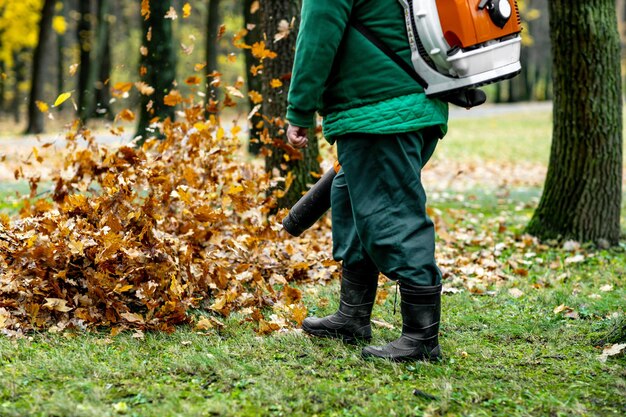
Step 2: Rake or Mulch Leaves Before They Smother the Lawn
A thin layer of leaves isn’t a problem. A thick, wet mat of leaves is.
If leaves sit all fall and early winter, they can:
- Block sunlight and air
- Trap moisture against the grass
- Encourage snow mold and bare patches
Two main approaches
1. Mulch mowing
Chopping dry leaves into small pieces with your mower so they filter down into the turf.
- Works best when leaves are relatively dry and not too deep
- Often reduces the need for bagging and hauling
- Adds organic matter to the soil over time
2. Raking or blowing and removing
- Useful when leaf volume is heavy or constantly falling
- Important for wet, matted, or diseased leaves
- Allows you to compost or dispose of leaves elsewhere
You don’t necessarily have to remove every leaf. The key is to avoid thick, smothering layers.
What shapes your leaf strategy
- Tree density and species (some drop slowly, some all at once)
- Lawn size and slope
- Available tools (mulching mower, leaf blower, simple rake)
- Your tolerance for a few stray leaves vs a spotless lawn
Step 3: Aerate Compacted Soil (When It Makes Sense)
Core aeration is the process of pulling small plugs of soil out of the lawn. This opens pathways for air, water, and nutrients to reach the roots.
Many lawns, especially those with heavy clay soils or lots of foot traffic, get compacted. Fall is a common time to aerate because grass is actively growing (for cool-season lawns) and can fill in the holes.
Benefits of aeration
- Helps relieve compaction
- Encourages deeper roots
- Improves water infiltration, reducing runoff
- Supports overseeding by giving seed more contact with soil
When fall aeration is especially useful
- You have a cool-season lawn in a region with hot summers
- Soil feels hard and water tends to puddle or run off
- The yard sees a lot of kids, pets, or sports traffic
- You plan to overseed to thicken the turf
Warm-season lawns are often aerated in late spring or early summer when they’re most actively growing. In some milder climates, fall aeration can still work, but timing is more delicate.
Questions to ask yourself
- Is your soil actually compacted, or just dry?
- Does your lawn thin out in high-traffic areas?
- Does water absorb normally when you irrigate or does it sit on top?
If you’re not sure, local cooperative extension services, garden centers, or lawn professionals can explain what’s typical for your area’s soil.
Step 4: Overseed Thin or Bare Areas (Primarily for Cool-Season Lawns)
Overseeding means spreading new grass seed over an existing lawn to fill in thin spots and improve density. Fall is prime overseeding season for cool-season grasses because:
- Soil is still warm from summer, but air is cooler
- Competition from many weeds is lower
- There’s usually more natural rainfall
Why overseed every year or two?
- Thick turf shades soil and helps crowd out weeds
- New varieties of seed often have better disease and drought tolerance
- Older lawns can become patchy or dominated by less desirable grasses
Typical overseeding process (conceptually)
- Mow slightly shorter than usual for better seed-to-soil contact
- Rake or dethatch lightly to remove excess debris
- Aerate (optional but helpful, especially on compacted lawns)
- Spread seed evenly over thin areas or the whole lawn
- Keep the seed bed moist until the new grass is established
Warm-season lawns are usually seeded or sodded in late spring or early summer. In many colder regions, fall is too late to establish warm-season grass from seed.
What influences overseeding decisions
- Grass type and region (cool vs warm-season zones)
- How “perfect” you want the lawn (casual vs showcase)
- Budget and time (overseeding is work, even if you DIY)
- Existing weed pressure (heavy weeds can overwhelm new seedlings)
Step 5: Fertilize Thoughtfully — Not Automatically
Fertilizing in fall can help build strong roots and improve color and thickness next spring, especially for cool-season lawns. But “more fertilizer” isn’t automatically better.
Why fall fertilization is common
For cool-season grasses, fall fertilizer often aims to:
- Repair stress from summer heat and drought
- Support root growth going into winter
- Boost carbohydrate reserves that fuel spring green-up
In many regions, fall is the primary fertilizing season for cool-season turf.
Key variables for fertilizer decisions
- Grass type:
- Cool-season lawns usually benefit most from fall applications.
- Warm-season lawns often get their main feeding in late spring or early summer; heavy late-fall nitrogen can sometimes cause problems.
- Soil test results:
A lab soil test can tell you if your lawn is actually low in nitrogen, phosphorus, potassium, or other nutrients. Without this, you’re guessing. - Local regulations:
Some areas limit fertilizer use or timing to protect water quality. - Your lawn goals:
A modest, low-input yard may need much less fertilizer than a high-performance, athletic-field-type lawn.
General fertilizer best practices
- Follow product directions; do not exceed recommended rates.
- Avoid spreading on frozen ground or just before heavy rain.
- Sweep or blow granules off sidewalks and driveways back onto the lawn.
- Consider slow-release options if you want more gradual feeding.
You don’t have to fertilize every fall. The right choice depends heavily on your soil health, climate, and expectations for how lush you want your lawn to be.
Step 6: Manage Weeds Strategically in Fall
Fall can be an effective time to tackle certain weeds:
- Many broadleaf weeds (like dandelions or clover) are actively pulling nutrients down into their roots, so they can be more susceptible to treatment.
- Newly germinated cool-season annual weeds (like some winter annuals) are just starting out.
Two broad weed-control approaches
1. Cultural control (non-chemical)
- Maintain a thick, healthy lawn through proper mowing, watering, overseeding, and fertilizing
- Hand pull or dig isolated weeds
- Improve drainage and sunlight where possible
2. Targeted herbicide use
- Post-emergent products aim at weeds you can already see
- Pre-emergent products target weed seeds before they sprout (timing is critical)
Whether and how to use herbicides depends on:
- Local rules and guidelines
- Your comfort level with chemicals
- Presence of kids, pets, and nearby gardens
- Weed type and severity
If you plan to overseed, some weed-control products can interfere with new grass seed, so timing and product choice matter.
Step 7: Water Wisely as Temperatures Drop
Many people turn off sprinklers too early in fall. Grass roots still need moisture, especially if you’ve:
- Recently overseeded
- Recently fertilized
- Just aerated
Fall watering basics
- Grass usually needs less frequent watering in fall than in peak summer because temperatures are lower and evaporation drops.
- The goal is deep, occasional watering rather than frequent, shallow sprinkling.
- Overwatering in cool weather can increase risk of disease and shallow roots.
Factors that influence your fall watering schedule
- Rainfall in your area
- Soil type (sandy soils drain faster; clay holds water longer)
- Slope and drainage (water may run off steeper areas)
- Irrigation system (manual hose vs automatic sprinklers)
As winter approaches, many climates require winterizing irrigation systems (draining or blowing out lines) to prevent freezing damage. The timing for that is driven by your local first-freeze dates.
Step 8: Deal With Thatch If It’s Truly a Problem
Thatch is the layer of dead and living stems, roots, and other organic material between the green grass and the soil. A thin thatch layer can be normal and even beneficial. Problems tend to appear when thatch becomes too thick, preventing water and nutrients from reaching roots.
Common thatch-management options
- Core aeration: helps break up and incorporate thatch into the soil
- Power raking / dethatching: more aggressive; useful only when thatch is clearly excessive
- Adjusting lawn care habits:
- Avoid over-fertilizing
- Avoid frequent, shallow watering
- Mow at appropriate heights
Fall is often chosen for thatch work because many cool-season lawns can recover well then.
What to consider before dethatching
- Do you actually have a thatch problem, or just a bit of dry grass on top?
- Is your lawn mostly spreading grasses (which tend to thatch more) or bunch-type grasses?
- Is your lawn already stressed (drought, disease, heavy shade)? Aggressive dethatching can make that worse.
Not every lawn needs dethatching every year. In many cases, aeration plus good basic care keeps thatch in check.
Step 9: Clean Up Edges, Tools, and Equipment Before Winter
This won’t directly change how green your lawn looks next spring, but it can save you time and money.
Helpful end-of-season habits
- Trim edges along sidewalks and beds to prevent encroaching grass
- Remove debris (sticks, toys, furniture) so it doesn’t kill grass over winter
- Clean and maintain tools:
- Sharpen mower blades
- Change oil and filters as needed
- Clean soil off shovels, rakes, and hand tools to prevent rust
- Store chemicals and fertilizers safely and according to label directions
A bit of organization in fall makes it easier to hit the ground running when spring arrives 🌤️
How Your Specific Situation Changes the “Right” Fall Routine
There’s no single checklist that fits every yard. The right mix of fall tasks depends on several key variables.
1. Grass type and climate zone
- Cool-season lawns in colder climates
- Fall is peak time for mowing, fertilizing, aeration, and overseeding.
- Warm-season lawns in mild climates
- Focus may shift more to leaf management, light cleanup, and adjusting mowing as growth slows.
2. Soil and drainage
- Heavy clay, compacted soil
- More likely to benefit from periodic aeration and careful watering.
- Sandy, fast-draining soil
- May need more attention to watering and organic matter.
3. Sun, shade, and yard use
- Shady areas often need:
- Slightly higher mowing height
- Different grass blends
- More patient expectations
- High-traffic yards (kids, pets, sports):
- May require more frequent overseeding and soil care.
4. Maintenance style and goals
- Low-maintenance, “good enough” lawn
- Might focus on mowing, leaf management, and occasional overseeding or spot repairs.
- High-performance or “showcase” lawn
- Often includes regular soil testing, carefully timed fertilizing, aeration, overseeding, and targeted weed control.
Key Questions to Help You Plan Your Own Fall Lawn Care
Instead of following a generic list, it helps to answer a few questions about your yard:
- What grass type do I have, and is it cool- or warm-season?
- How does my lawn look at the end of summer? (Thin, weedy, compacted, or generally healthy?)
- What is my soil like? (Clay, loam, sandy? Compacted or loose?)
- How much time and money do I realistically want to invest?
- Are there local rules or restrictions on watering, fertilizer, or leaf disposal?
Once you know those basics, you can decide which annual fall lawn care tips belong on your list this year:
- Keep mowing at an appropriate height
- Mulch or remove leaves before they mat down
- Aerate where soil is compacted
- Overseed thin cool-season lawns
- Fertilize thoughtfully, based on grass type and soil needs
- Manage weeds strategically
- Water enough to support roots and any new seed
- Address thatch only if it’s truly excessive
- Clean up and maintain edges, tools, and equipment
From there, you can adjust year by year as you see how your lawn responds and as your goals change.