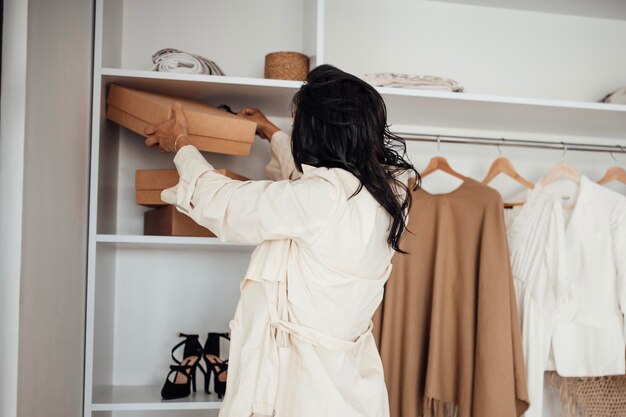
How to Organize a Small Closet: Simple, Space-Saving Strategies That Actually Work
A small closet can feel impossible to manage: clothes crammed together, shoes in a pile, and stuff you forgot you even owned. The good news is, a tiny closet can still work really well if it’s organized for how you actually live, not how a magazine photo looks.
This guide walks through practical, no-nonsense ways to organize a small closet, with a focus on decluttering and smart cleaning & organization habits. You’ll see different options depending on your space, your wardrobe, and how much effort you want to put in.
What “Organized” Means for a Small Closet (and Why It’s Different)
In a big walk-in closet, you can spread things out and still be “organized.”
In a small closet, organization usually means:
- You can see what you own without digging.
- You can reach your everyday items easily.
- Nothing falls on you when you open the door. 🙂
- You’re using vertical space, doors, and corners wisely.
For most people, that involves:
- Decluttering (having less in the closet)
- Zoning (grouping like items together)
- Choosing the right storage tools for your specific space
- Maintaining (small habits so it doesn’t explode again)
What this looks like for you will depend on:
- How many clothes you actually own
- Whether the closet is shared
- The type of closet (reach-in, sliding doors, wardrobe, etc.)
- Whether you store only clothes or “everything” (luggage, linens, gifts, etc.)
Your best setup won’t look like anyone else’s, but you can use the same core steps and adapt them.
Step 1: Declutter Before You Organize Anything
If your closet is small, decluttering is the biggest space saver. No organizer, shelf, or hack can beat simply having fewer things crammed in.
How to Quickly Sort What’s in Your Closet
You don’t have to empty the whole thing if that overwhelms you. You can work in sections (top shelf, hanging bar, floor, etc.).
Make 4 basic piles or bags:
- Keep (in closet) – You actually wear it or use it now.
- Keep (elsewhere) – Off-season items or things that belong in another room.
- Maybe – You’re genuinely unsure.
- Let go – Donate, sell, recycle, or toss, depending on condition.
As you sort, ask questions like:
- Have I worn this in the past year in my real, current life?
- Does it fit me now, not “someday”?
- Would I buy this again today?
- Is this worth the space it takes in a small closet?
You don’t need to hit some perfect number of items; the goal is what fits comfortably in your space.
What Usually Doesn’t Earn Closet Space in a Small Closet
Many people choose to move or let go of:
- Formal outfits they never wear
- “Just in case” clothes that haven’t been touched in years
- Excess duplicates (five black cardigans, ten pairs of jeans, etc.)
- Broken or uncomfortable shoes
- Bulky bedding, luggage, holiday decor (often better in another storage area, if possible)
You decide what stays. The key is being honest about what you actually use.
Step 2: Decide the Main Job of This Closet
A small closet usually can’t do everything at once. It helps to decide: What is this closet primarily for?
Common roles:
- Daily clothing closet (your main wardrobe)
- Shared closet (two people’s clothes)
- Mixed storage (clothes + linens + extras)
- Utility (coats, cleaning supplies, overflow items)
You might still store more than one type of thing, but your priority affects how you set it up.
| Closet’s Main Role | What Usually Gets Prime Space | What Often Moves Out or Up/Down |
|---|---|---|
| Daily clothing | Everyday clothes, underwear, shoes | Off-season clothes, memorabilia |
| Shared clothing | Each person’s everyday items | Duplicates, rarely worn or “maybe” items |
| Mixed storage | The items you reach for most often | Rarely used linens, seasonal stuff |
| Utility / coat closet | Coats, bags, outerwear, cleaning tools | Out-of-season gear, bulky extras |
Knowing the closet’s main job helps you prioritize what lives at eye level and within easy reach.
Step 3: Measure and Understand Your Actual Space
Before you buy a single bin or shelf, take 10 minutes to understand your closet’s real dimensions and layout:
- Width (left to right)
- Height (floor to ceiling)
- Depth (front to back)
- Any obstacles: low ceilings, sloped walls, light fixtures, vents
- Door type: hinged, sliding, bifold, or no door
Door type matters more than people realize:
- Hinged/swing doors – often allow over-the-door organizers for shoes, accessories, or small items.
- Sliding doors – limit access to one side at a time; you usually want clear zones on each half.
- Bifold doors – okay for some hanging or over-the-door storage, but heavy organizers can make them jam.
- Open/no door – you may care more about how tidy it looks from the room.
These details help you choose realistic storage solutions instead of guessing.
Step 4: Create “Zones” Inside Your Small Closet
“Zoning” just means grouping items by type and often by how often you use them. This cuts down on daily digging and mess.
In a small closet, think in three vertical bands:
Prime zone (shoulder to hip height)
- Best for everyday clothes and shoes you reach for regularly.
Upper zone (above your head)
- Good for off-season items, extra bedding, rarely worn shoes, or sentimental things.
Lower zone (floor to knee)
- Works for shoes, baskets, or drawer units.
You can also make side-to-side zones:
- Left side: work clothes
- Right side: casual or workout clothes
- Or: one side per person in a shared closet
The exact layout depends on:
- Your height (what’s “easy to reach” for you)
- Whether kids use the closet
- How many categories you manage (workwear, uniforms, hobbies, etc.)
The goal: You know where things live, and they stay in that zone.
Step 5: Use Vertical Space and Slim Storage Wisely
Small closets benefit most from using height and keeping things compact. Here are common tools and how they generally work:
1. Double-Hang or Extra Rods
If you mainly hang shorter items (shirts, blouses, folded pants), a second rod can almost double hanging space.
- Good fit for: People with lots of shorter tops, kids’ clothes.
- Less ideal for: Long dresses, coats, or if you prefer folding most items.
You can add a true second rod (permanently) or use clip-on/adjustable hanging rods.
2. Shelves and Shelf Dividers
Upper shelves can become messy piles. Shelf dividers help keep stacks of jeans, sweaters, or bags from toppling.
- Good fit if you like folding and can reach the area without a big struggle.
- Helpful for: Bags, hats, off-season clothes in labeled bins.
If there’s no top shelf, adding even a basic one can dramatically increase space.
3. Thin, Matching Hangers
Switching to slim, consistent hangers can free up noticeable room and make clothes hang more evenly.
- Benefit: Clothes slide less, look neater, and you can see everything more clearly.
- Drawback: Changing all hangers takes some time and some people simply don’t care enough to switch.
This isn’t essential, but in a very small closet, the space savings and tidy look can matter.
4. Over-the-Door Storage
On a hinged door, you can often hang:
- Shoe organizers
- Small pocket organizers for accessories
- Hooks for bags, robes, or scarves
Pros:
- Uses otherwise wasted space.
- Keeps small items contained and easy to see.
Cons:
- May not work with sliding/bifold doors.
- Can add weight that affects how smoothly the door opens.
5. Floor Storage: Bins, Drawers, or Shoe Racks
The floor is precious space, but if it’s just a pile of shoes, it doesn’t help you much.
Common approaches:
- Low drawers or plastic units – create extra “dresser” space inside the closet.
- Stackable bins – good for items like out-of-season clothes, sports gear, or bulkier shoes.
- Tiered shoe racks – make it easier to see pairs and avoid the shoe pile.
What works best depends on:
- How deep the closet is
- Whether the doors slide (you don’t want bins blocking them)
- How often you access what's stored at floor level
Step 6: Decide What to Hang vs. What to Fold
This choice has a big impact in a small closet.
Clothes That Often Work Better Hung
- Dresses
- Blouses and shirts that wrinkle easily
- Blazers and suit jackets
- Coats and jackets
- Work trousers (if you like them crease-free)
Clothes That Often Work Well Folded
- T-shirts
- Jeans
- Sweaters (hanging can stretch them)
- Workout clothes
- Pajamas
- Casual shorts
Of course, it depends on:
- How much rod space you have vs. shelf/drawer space
- Your tolerance for folding vs. hanging
- Whether you have a separate dresser
A simple approach: Hang what you love or wear most outside the home; fold casual and comfy items when space is tight.
Step 7: Use Simple Containers to Prevent Re-Clutter
Bins, baskets, and boxes aren’t magic, but they give items defined “homes”, which makes it easier to put things away.
Useful container categories in a small closet:
Small bins for:
- Belts
- Scarves
- Ties
- Small accessories
Medium bins for:
- Off-season clothes
- Swimsuits
- Workout sets
- Kids’ “too big” or “hand-me-down” items
Clear or labeled containers so you aren’t guessing what’s inside.
For many people, a few well-chosen containers beat an army of boxes. Too many bins can create clutter of their own, especially if your closet is shallow or narrow.
Step 8: Handling Shoes in a Small Closet
Shoes can eat up a small closet fast. How you manage them depends on:
- How many pairs you own
- Whether you share the closet
- If you can store off-season shoes elsewhere
Common options:
- Over-the-door shoe pockets – good for flats, sandals, and light shoes.
- Low rack on the floor – 2–3 tiers to get shoes off the ground.
- Clear boxes – protect nicer shoes; stackable but take more effort.
- Under-bed storage – off-season shoes moved out of the closet entirely.
A pattern that helps many people:
- Keep daily/weekly shoes in the closet where they’re easy to grab.
- Store rarely worn or out-of-season shoes somewhere else (under-bed, entry bench, another closet).
Step 9: Seasonal Rotation: A Big Win for Small Closets
If your climate has real seasons and your closet is small, rotating clothes can make it feel twice as big.
How it typically works:
- Twice a year (or more often if you like), pull out clearly off-season clothes.
- Move them to:
- Under-bed storage
- Labeled bins on a high shelf
- Another storage area (spare closet, garage, etc. if suitable)
- Bring in the new season’s clothes and organize them in your main zones.
This doesn’t reduce how much you own, but it reduces what lives in your daily closet at one time, which makes the space far more usable.
Whether rotation works for you depends on:
- Available storage elsewhere
- How stable your climate is
- How often you need access to those “off-season” items
Step 10: Keep It Organized with Small, Realistic Habits
No closet setup stays perfect on its own. The trick is light maintenance, not perfection.
Many people find it manageable to:
- Do a quick tidy once a week:
- Put stray items back in their zones
- Toss obvious trash (tags, broken hangers, empty bags)
- Do a mini-declutter every few months:
- One shelf, one rod, or just shoes
- Use simple rules like:
- “One in, one out” for certain categories (for example, if you bring in a new sweatshirt, one older sweatshirt leaves)
- “If it doesn’t fit in the space, something needs to go” for specific bins or shelves
What habits you choose depend on:
- How many new items you buy
- How many people share the closet
- Your tolerance for visual clutter
The goal isn’t a picture-perfect closet; it’s a space that works for you most days with minimal stress.
FAQ: Common Small Closet Questions
How do I organize a small closet with too many clothes?
When the amount of clothing and the size of the closet don’t match, your choices are usually:
- Reduce what lives in the closet (declutter and/or rotate seasonally)
- Use other storage (dresser, under-bed storage, secondary closet)
- Reconfigure the closet layout (double-hang rods, extra shelves)
You don’t have to get rid of everything you love, but in a truly small space, keeping every single item in that one closet at all times is rarely workable.
How can I organize a small closet on a budget?
Many people organize well with little or no spending by:
- Reusing boxes or baskets they already have
- Folding instead of buying elaborate systems
- Using simple hooks instead of specialty racks
- Installing a basic second rod or shelf instead of custom built-ins
If you decide to spend money, focus first on one or two high-impact changes, like a second hanging bar or a shoe rack, before buying lots of small organizers.
How do I organize a small closet without drawers?
If your closet doesn’t have built-in drawers, you have options:
- Add a small drawer unit on the floor under hanging clothes
- Use shelves plus bins as “soft drawers”
- Use over-the-door pockets for smaller items like socks, underwear, or accessories
Whether you need drawers at all depends on your style. Some people prefer almost everything on hangers; others feel more organized with folding.
How do I share a small closet with a partner or roommate?
Shared closets work better when:
- Each person has clearly defined space (left/right, top/bottom, or specific sections)
- You agree on some basic rules (for example, no overflow into the other person’s zone)
- You’re both honest about what actually fits
Some couples or roommates keep rarely worn or special-occasion items somewhere else to free up prime space for daily wear.
Should I color-code my small closet?
Color-coding can look nice and can make it easier to find things, but it’s optional.
If you like visual order, you might:
- Group items first by type (shirts, pants, dresses)
- Then arrange them by color within each type
If that feels like too much work, a simpler system—like grouping by purpose (work, casual, workout)—can be more sustainable.
How do I stop my small closet from getting messy again?
Lasting organization usually depends more on habits than on containers. Many people find success with:
- Putting things back in their assigned zones (hangers, bins, racks)
- Doing a 5-minute reset once or twice a week
- Being realistic about how much can fit and adjusting what you own over time
The right system for you is the one you’ll actually maintain, not the most complicated or “perfect” one.
If you remember nothing else, remember this:
A small closet works best when it holds the right amount of the right things, arranged so you can see and reach what you need. The exact setup depends on your wardrobe, your home, and your habits—but the steps above give you a clear starting map.