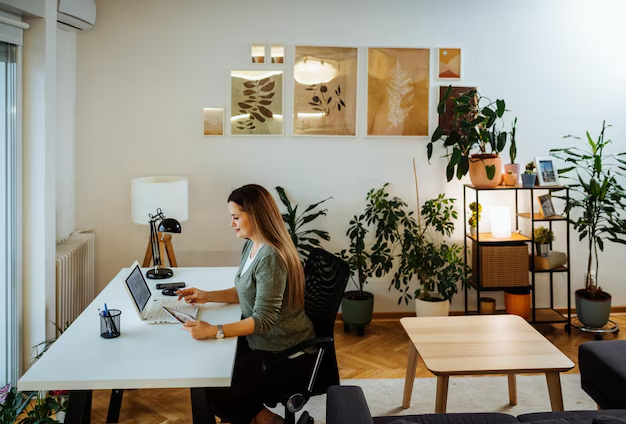
How to Decorate with Houseplants: Simple Decorating Tips for Any Home
Decorating with houseplants is one of the easiest ways to make a space feel alive, welcoming, and more “finished.” But it can also feel confusing: What plants go where? How many is too many? How do you make them look intentional instead of random?
This guide walks through how to decorate with houseplants from an interior design point of view, not a gardening one. You’ll see the main approaches, how they differ, and which factors usually matter most, so you can decide what fits your home, light, budget, and patience.
Why Decorate with Houseplants at All?
Before you decide how to decorate with plants, it helps to understand what they actually do for a room.
Common design benefits of houseplants:
- Soften hard lines – Plants break up rigid furniture layouts and straight edges.
- Add texture and depth – Leaves, stems, and soil all add visual interest.
- Introduce color – From deep green to variegated patterns to flowers.
- Fill awkward spaces – Empty corners, high shelves, and bare walls.
- Create focal points – A large plant or plant grouping can anchor a room.
- Change the mood – Greenery often makes spaces feel calmer and more lived-in.
How much you lean on each of these benefits depends on your style. A minimalist may use one striking tree as a focal point; a maximalist might build a jungle-style layered look.
Step 1: Think Like a Designer, Not a Plant Collector
Many people buy plants they like, then figure out where to put them. Interior designers often reverse that: they look at the room first, then choose plants to support the design.
Key questions to ask about your space:
- Light: Is it bright, medium, or low overall? Are there sunny spots and darker corners?
- Style: Clean and modern? Cozy and traditional? Eclectic and colorful?
- Scale: High ceilings or low? Large furniture or compact pieces?
- Traffic: Kids, pets, or narrow walkways that might bump into plants?
- Maintenance tolerance: Do you want low-effort greenery, or is plant care a hobby?
You don’t have to answer these like a professional. Just noticing these variables helps you choose what kind of plant decor is realistic for your home, not for an idealized Pinterest photo.
Step 2: Choose Your Overall “Plant Aesthetic”
There isn’t one “right” way to decorate with houseplants. Most plant-filled rooms fall into a few broad styles.
| Plant Decor Style | Main Look | Typical Plants/Containers | Works Well If… |
|---|---|---|---|
| Minimal & Sculptural | Few plants, bold shapes, lots of empty space | Tall trees, cacti, simple pots | You like clean lines and low visual clutter |
| Layered & Lush | Many plants, multiple heights, “full” look | Vines, bushy plants, varied textures | You enjoy a cozy, collected feel |
| Symmetrical & Formal | Balanced pairs, neat layouts | Matching plants on each side of a feature | You like order and a classic look |
| Eclectic & Collected | Mix of sizes, pots, and styles | Thrifted pots, various plant types | You like things to feel personal and relaxed |
You can mix styles, but knowing which direction you lean toward makes decisions easier. For example:
- If you dislike clutter, one large plant in a sleek pot may be better than six small ones.
- If you love detail, a cluster of small plants on a shelf may make you happier than a single big one in the corner.
Step 3: Match Plant Size and Shape to the Room
From an interior design perspective, plant size and shape matter as much as the species.
Large floor plants: anchoring and dramatic
What they do in a room:
- Fill empty corners that make the room feel unfinished
- Draw the eye upward (great for low rooms that need a sense of height)
- Create a clear focal point without adding another piece of furniture
Typical placements:
- Next to a sofa or chair
- In a bare corner
- Flanking a TV stand, sideboard, or fireplace (depending on heat)
Work best when:
- You have floor space and a mostly open layout
- You want to keep surfaces (tables, shelves) more minimal
Medium plants: flexible fillers
These often sit on stools, side tables, plant stands, or low cabinets.
They’re useful for:
- Connecting heights between low furniture and taller items
- Filling gaps on media consoles or dressers
- Adding greenery where a lamp or decor alone feels flat
Small plants: detail and layering
Small plants are great for intimate spaces and up-close views:
- Desks and nightstands
- Window sills
- Bookshelves
- Bathroom counters
They:
- Add subtle color and texture
- Are easy to move around as you rearrange
- Can get visually “noisy” if you have too many, especially in small rooms
If you like a calm look, you might limit small plants to a few curated spots rather than a plant on every surface.
Step 4: Use Height and Levels to Avoid the “Plant Parking Lot” Look
Lining a row of plants all at the same height (like the top of a cabinet) can make them blend into one visual stripe. Designers usually aim for varied heights, which creates more interest and balance.
Ways to vary height:
- Plant stands – Raise some plants up beside lower furniture.
- Hanging planters – Bring greenery up to ceiling level.
- Wall shelves – Add a mid-height level between floor and ceiling.
- Stacked surfaces – Plants on window sills, side tables, and bookcases.
Think in terms of a visual triangle:
- One tall element (like a floor plant)
- One or two medium elements (table-height plants)
- A few small ones to fill in
You can repeat that pattern around the room so your eyes travel smoothly instead of landing on one overloaded spot.
Step 5: Choose Pots and Planters Like You Choose Furniture
People often focus on the plant and ignore the pot. But from a decorating standpoint, the container is part of the furniture and color scheme.
Common pot choices and the look they give
| Pot Style | Visual Effect | Fits Best With… |
|---|---|---|
| White or neutral ceramic | Clean, bright, modern | Minimalist, Scandinavian, contemporary styles |
| Terracotta (clay) | Warm, earthy, casual | Boho, Mediterranean, “collected” styles |
| Black or dark pots | Bold, graphic, grounding | Modern, industrial, high-contrast interiors |
| Wicker/basket covers | Soft, cozy, textured | Coastal, rustic, relaxed spaces |
| Colorful or patterned pots | Playful accent, more personality | Eclectic, maximalist, or kid-friendly spaces |
Variables to consider:
- Color palette – Are you matching your existing colors, or do you want pots to stand out?
- Finish – Matte reads softer; glossy reads more polished or formal.
- Shape – Tapered pots feel lighter; straight-sided or chunky pots feel more substantial.
From a practical point of view, many people use a plain nursery pot inside a decorative cachepot (outer pot). That way:
- You can swap the outer pot without repotting.
- It’s easier to manage drainage (as long as you handle excess water carefully).
Step 6: Place Plants to Support How You Actually Use the Room
Decorating with houseplants isn’t only about how things look; it also affects how the room functions.
Living room
Common goals:
- Make the space feel cozy and inviting 🛋️
- Soften tech-heavy areas (like around a TV)
- Fill corners without blocking walkways
Typical plant placements:
- A large plant beside the TV stand to soften the hard rectangle.
- Medium plants on side tables (avoiding spots where they’ll be bumped).
- Trailing plants on high shelves or bookcases.
Consider:
- Traffic patterns – Don’t put fragile plants where kids or pets run.
- View lines – Tall plants can block views between seating areas if not placed carefully.
Bedroom
Common goals:
- Calm, restful, not cluttered
- Simple watering routine
Typical placements:
- A small plant on the nightstand (not so big it’s easy to knock over).
- A medium plant on a dresser.
- A taller plant in a low-traffic corner.
Variables:
- If you’re sensitive to visual clutter, fewer, larger plants may feel better than many small ones.
- Consider your morning/evening routine: if watering is easier in one room, you might place more plants there.
Kitchen
Common goals:
- Fresh, lively feeling
- Herbs or small plants near the sink or window
Common placements:
- Window sill plants or herbs
- Hanging planters near bright windows
- A small plant on a counter or island (away from intense heat or splashes)
Think about:
- Heat and steam near the stove.
- Grease and splatter from cooking.
- Counter space – You may not want plants where you prep food.
Bathroom
Bathrooms can be tricky but rewarding:
Pros:
- Often have good humidity (plants like that).
- Even one plant can make the space feel spa-like. 🛁
Variables:
- Light – Some bathrooms have no windows; some have bright ones.
- Ventilation – High humidity with poor airflow can affect plant health.
In very low-light bathrooms, people sometimes use a single hardy plant or even a realistic faux plant purely for visual effect.
Step 7: Combine Houseplants with Other Decor Elements
Plants don’t need to be the only stars of the room. They can be part of a bigger design story.
With artwork
- Place tall plants near art to frame it and draw attention.
- Avoid blocking key parts of a painting or print with big leaves.
- Let trailing plants echo the shapes or colors in wall art for a subtle tie-in.
With books and shelves
- Alternate stacks of books, small decor objects, and plants.
- Use trailing plants (like pothos) on higher shelves to break up rigid lines.
- Make sure shelves can handle the combined weight of books, pots, and soil.
With textiles
- Greenery often pairs well with natural textures:
- Linen curtains
- Wool throws
- Jute or sisal rugs
- Think about color harmony: deep green plants against deep jewel tones feel rich; against lighter neutrals they feel airy.
Step 8: Use Plants to Adjust the Room’s Mood
Houseplants can completely change how a room feels, even if your furniture stays the same.
You can use plants to:
- Make a sterile space feel warmer
- Add terracotta pots and bushy plants.
- Make a busy room feel calmer
- Use fewer, larger plants in simple pots.
- Add drama to a plain room
- Choose striking shapes (like tall, architectural plants) or bold dark pots.
- Bridge styles
- If one piece of furniture feels off-style, plants can help visually “blend” it into the room.
Variables that affect mood:
- Leaf shape – Big, round leaves feel softer; thin, spiky ones feel more energetic.
- Plant density – Sparse, sculptural plants create a calm vibe; dense, leafy arrangements feel lush and abundant.
- Color contrast – Dark green against light walls or vice versa can add impact.
Step 9: Balance Realism and Maintenance
The prettiest plant setup won’t help if it’s impossible to maintain in your real life.
Questions to ask yourself honestly:
- How often do you want to water? (Every few days, weekly, less?)
- Do you travel often or have irregular schedules?
- Are there kids or pets that might chew or knock things over?
- Are you willing to move plants seasonally as light changes?
These variables affect what kind of plant layout makes sense:
- If you prefer low effort, you might:
- Group plants in just a few spots so watering is easy.
- Avoid fragile or very thirsty plants in hard-to-reach places.
- If plant care is a hobby for you, you might:
- Use more varied species and placements.
- Enjoy rotating plants to different positions as decor evolves.
Some people also mix real and faux plants:
- Real plants in key, higher-light spots
- Quality faux greenery in very dark corners, high shelves, or awkward spots
That’s a design choice, and the “right” balance depends on your priorities: realism vs. ease.
Step 10: Plan a Simple Arrangement Before You Buy
You don’t need a complicated plan. A quick sketch or mental layout can prevent random impulse buys.
A common, flexible basic plan for a living room might look like:
- 1–2 large floor plants for corners or beside big furniture pieces
- 2–4 medium plants on stands, side tables, or cabinets
- A few small plants on shelves, desks, or window sills
Variables that would change that:
- Small room – fewer, slightly larger plants can feel cleaner than many tiny ones.
- Very bright space – you have more options for placement and types.
- Very low light – you might keep plants near windows and rely more on decor elsewhere.
Once you place them, expect to adjust:
- You may move a plant that looks too crowded next to a patterned curtain.
- A plant might grow and suddenly block a view or piece of art.
- You may discover certain spots are annoying to water and rethink things.
That trial-and-error is normal. Designing with living things is always a bit fluid.
Key Things to Pay Attention to as You Decorate
To make decorating with houseplants work for you, you’ll want to keep an eye on:
- Your light levels – They limit where living plants can realistically thrive.
- Your style preferences – Minimal vs. lush, symmetrical vs. eclectic.
- Scale and proportion – Match plant size to room and furniture size.
- Height variety – Use floor, table, shelf, and hanging levels for interest.
- Color and container choices – Pots are part of your interior design.
- Function and traffic – Avoid blocking pathways or daily tasks.
- Maintenance tolerance – Choose layouts you can actually care for over time.
Once you’re aware of those variables, you can look at any plant inspiration photo and understand what’s going on behind the pretty picture—and which parts might fit your own space, lifestyle, and taste.