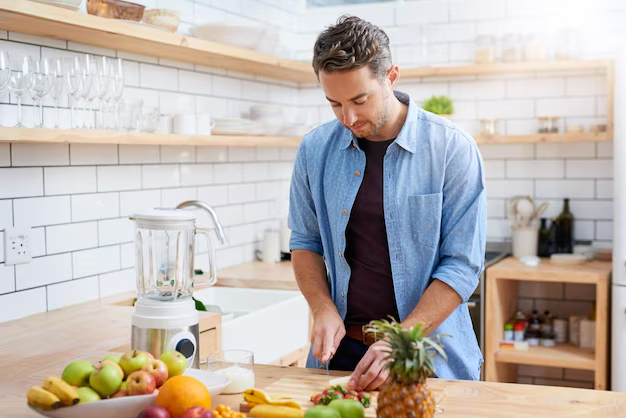
How to Set Up a Kitchen for Meal Prep: A Practical, Step-by-Step Guide
Meal prep sounds simple: make food in advance so your week is easier. But if your kitchen isn’t set up for it, meal prep quickly turns into a stressful mess.
This guide walks through how to organize your kitchen for meal prep, what choices you’ll need to make based on your space and habits, and how to decide what will actually work for you.
What “Meal Prep–Friendly” Really Means
A kitchen that’s good for meal prep usually has three things:
- Clear zones – spots for chopping, cooking, cooling, and storing
- Easy access – tools and ingredients you use often are within reach
- Simple systems – you can repeat the same routine weekly without thinking much
How that looks in real life depends on:
- The size of your kitchen (tiny apartment vs. big open layout)
- How many people you cook for (just you vs. family of five)
- Your meal style (full meals vs. just components like grains, proteins, veggies)
- Time you realistically have on prep days
- Your tolerance for visual clutter (minimalist vs. “everything out where I can see it”)
You don’t need a showroom kitchen. You need a layout that supports your way of cooking.
Step 1: Clear Space for Meal Prep Work
Before organizing, you need actual room to work.
Focus on your main counter
For meal prep, your primary work zone is the counter where you:
- Chop vegetables
- Season meats
- Portion meals into containers
If that space is covered in mail, appliances, and random stuff, meal prep will always feel annoying.
Helpful starting moves:
- Remove non-kitchen items
Paper, keys, school supplies, tools – all of that lives better in another area. - Limit countertop appliances
Keep out only what you use every day (for you, that might be a coffee maker, kettle, or toaster). Everything else can be stored away if space allows. - Pick one main “prep counter”
In a small kitchen, this might be half the space next to the sink or stove. In a larger kitchen, it might be an island.
The goal isn’t perfection; it’s having one reliable, mostly-clear surface you can count on every week.
Step 2: Create Simple Kitchen “Zones” for Meal Prep
You don’t need labels on every drawer, but a few clear zones make prep faster and calmer.
Common meal prep zones
| Zone | Purpose | What usually lives here |
|---|---|---|
| Prep zone | Chop, mix, portion | Cutting boards, knives, mixing bowls, measuring tools |
| Cooking zone | Stove/oven work | Pans, spatulas, pot holders, oils, frequently used spices |
| Cleaning zone | Washing produce, dishes, containers | Dish soap, brushes, drying rack, towels |
| Storage zone | Storing finished meals & ingredients | Food containers, foil, wraps, labels, pantry items |
| Cold storage zone | Fridge/freezer organization | Prepped meals, grab-and-go items, proteins, veggies |
In a small kitchen, several of these zones might overlap (for example, your prep and cooking zones can be the same stretch of counter). What matters is that you decide where each activity generally happens.
How to place your zones
Consider:
- Right-handed vs. left-handed
Right-handed people often prefer knives and cutting boards stored on the right side of the main prep area; left-handed, on the left. - Walking distance
If you constantly walk across the room from cutting board to trash can, consider moving a small trash bin or compost caddy near your prep zone. - Safety
Keep knives and heavy pots away from the edge, and think about kids or pets if they share the space.
Meal prep gets easier when you’re not hunting for things or zig-zagging across the kitchen.
Step 3: Organize Tools for Fast, Repeated Use
Meal prep uses the same tools over and over. The trick is to store them where you use them.
Core meal prep tools to gather
Most people find these especially useful:
- Cutting boards (at least one large, one smaller)
- Sharp chef’s knife and maybe a paring knife
- Measuring cups and spoons
- Mixing bowls in a few sizes
- Sheet pans or baking trays
- Skillet and/or large pot
- Spatulas, tongs, ladle, wooden spoon
- Colander or strainer
- Food storage containers with matching lids
You don’t need all the gadgets. Meal prep is mostly chopping, roasting, boiling, and portioning.
Where to store what
Near the prep zone:
- Knives and cutting boards
- Measuring cups/spoons
- Mixing bowls
- Frequently used spices and oils
Near the stove/oven:
- Pots and pans
- Spatulas, tongs, wooden spoons
- Pot holders and trivets
- High-heat oils (if you use them often)
Near the sink:
- Colander
- Scrub brushes, soap, drying rack
- Towels and dishcloths
Near the fridge / storage area:
- Food containers and lids
- Foil, parchment paper, plastic wrap
- Labels or masking tape and a pen
If something is always out of place during prep, that’s a sign it’s stored too far from where you use it.
Step 4: Choose and Arrange Food Storage Containers
Containers are where meal prep either stays organized or completely falls apart. 🥡
Main container choices
There are a few broad types:
| Type | Pros | Cons | Good for… |
|---|---|---|---|
| Glass containers | Don’t stain, reheat well, see-through | Heavier, breakable, often more expensive | Home storage, oven reheating |
| Plastic containers | Lightweight, stackable, often cheaper | Can stain/warp, may absorb odors | On-the-go meals, kids’ lunches |
| Divided containers | Built-in sections | Less flexible for different meal types | “Complete” ready-to-eat meals |
| Freezer bags | Space-saving in freezer | Single-use or limited reuse, less sturdy | Freezing soups, marinated meat |
What works best depends on:
- Whether you reheat in the container
- How often you take meals to work or school
- How much fridge and freezer space you have
- Whether you prefer fewer, sturdy pieces or many lightweight ones
Systems that keep containers sane
- Choose one or two container sizes for most meals
A “standard” size makes stacking and portioning faster. - Store lids and bottoms together
That could be:- Lids standing vertically in a bin
- Containers nested, lids in a separate but nearby box
- Stack by shape
Rectangles stack more neatly than random shapes. Mixing too many shapes makes your cabinets chaotic. - Label meals clearly
Even simple systems help:- Masking tape + marker: dish name + date
- Color-coded lids for different people in the household
You don’t need matching, Instagram-ready containers. You do need a system where you can quickly find a container and its lid without swearing.
Step 5: Set Up the Fridge and Freezer for Meal Prep
A crowded, random fridge makes meal prep frustrating. A little structure goes a long way.
Basic fridge layout ideas
Most people find this sort of structure helpful:
Top shelf: Ready-to-eat or prepped items
- Cooked meals
- Washed and cut fruits/veggies
- Yogurts, snacks for grab-and-go
Middle shelves: Ingredients for the current week
- Cooked proteins and grains
- Open sauces and condiments you use often
Bottom shelf: Raw meat and fish
- To prevent drips onto other foods
- Ideally on a tray or in a bin
Crisper drawers: Produce
You can group by:- Type (leafy greens, firm veggies, fruit)
- Ready-to-eat vs. to-be-cooked
Door: Items that can handle temperature changes
- Condiments, sauces, sturdy drinks
Freezer organization for meal prep
Freezers can easily turn into a black hole.
Common approaches:
- Flat-freeze method
Freeze soups, stews, and cooked grains in freezer bags laid flat; once frozen, stand them upright like files. - Category bins
One bin for proteins, one for veggies, one for cooked meals, one for “ingredients” like stock or frozen herbs. - Label everything with date + contents
No matter how good your memory is, mystery containers will appear.
What you freeze and how much depends on:
- Your prep style (cook once for the week vs. batch cook for the month)
- How big your freezer is
- Whether you’re cooking for variety or happy repeating meals
Step 6: Stock a “Meal Prep Pantry” That Matches Your Style
Your pantry doesn’t have to be fancy. It does need to support the way you prep.
Common pantry categories for meal prep
- Base ingredients
- Rice, pasta, quinoa, lentils
- Oats or other breakfast grains
- Canned goods
- Beans, tomatoes, tuna, coconut milk
- Cooking essentials
- Oils, vinegar, salt, pepper
- A handful of spices you actually use
- Quick flavor boosters
- Broth or bouillon
- Soy sauce, hot sauce, mustard
- Jars of pesto or curry paste (if you like them)
- Snacks and extras
- Nuts, seeds, dried fruit
- Crackers, nut butters
Organizing the pantry for fast prep
- Group by use, not just by type
For example:- “Quick dinners” shelf: pasta, canned tomatoes, broth, beans
- “Breakfasts”: oats, chia seeds, nut butters
- Keep everyday items at eye level
The things you reach for weekly should not live on the top shelf. - Avoid deep, hidden piles
If possible, use bins or baskets you can pull out, so nothing gets lost in the back.
Which items you stock will depend on your usual meals, dietary needs, and budget. The purpose of a pantry for meal prep is consistency, not perfection: you know that certain building blocks are almost always on hand.
Step 7: Build a Cleaning Setup That Doesn’t Get in Your Way
Meal prep means a lot of dishes in a short time. A thoughtful cleaning and drying setup makes it doable.
Useful cleaning habits and setups
- Start with an empty sink and dishwasher (if you have one)
Otherwise, dirty dishes pile up faster than you can cook. - Use a “trash bowl” or compost container on the counter
All peels, scraps, and wrappers go in one place instead of back and forth to the trash can. - Wash as you go
- Rinse cutting boards between chopping raw meat and vegetables
- Load utensils and smaller items into the dishwasher during downtime
- Have a clear drying area
Even if you don’t have a drying rack, one side of the sink or a mat can be your “clean zone.” - Keep cleaning basics close
Dish soap, scrubber, dishcloths, and paper towels or rags within arm’s reach of the sink.
Your exact routine depends on:
- Whether you have a dishwasher
- How much counter space you can dedicate to drying
- Whether you’re prepping alone or with other people
Step 8: Plan Your Prep Flow Around Your Space
Once your kitchen is physically set up, the final step is planning how you move through it on prep day.
A simple meal prep flow
You can adapt this to your own kitchen:
- Clear and clean your main counter
- Gather tools you’ll use repeatedly
(knives, cutting boards, bowls, measuring spoons) - Pull out ingredients from pantry and fridge for the first recipe
- Start with what takes longest
- Grains in the rice cooker or pot
- Proteins in the oven or slow cooker
- While those cook, use the prep zone
- Chop veggies
- Prep snacks or breakfasts
- Use the cooling area
- As items finish, let them cool on trivets or a separate counter
- Portion into containers at the prep zone
- Store and label in fridge/freezer storage zones
- Final cleanup around the cleaning zone
How many recipes you make, and how ambitious you get, depends on:
- Your time window (30 minutes vs. a few hours)
- Your energy level at the end of the week
- Whether you prefer variety or don’t mind repeating meals
Over time, you’ll likely adjust this routine to match what feels natural in your kitchen.
Common Questions About Setting Up a Kitchen for Meal Prep
Do I need a big kitchen to meal prep?
No. Meal prep is absolutely possible in a small or galley kitchen. The tradeoffs are:
- You’ll prep in smaller batches
- You may rely more on vertical storage (shelves, hooks, magnetic strips)
- You’ll probably focus on fewer recipes at once to avoid clutter
What matters more than size is how cluttered and disorganized the space is. A small, well-organized kitchen often beats a huge, messy one.
How many containers do I actually need?
It depends on:
- How many meals per week you prep ahead
- Whether you prep full meals or just components
- How many people you’re cooking for
Some people only need enough containers for a few lunches. Others batch cook dinners and breakfasts and might use several dozen pieces over a week or two. It often works better to start with a modest amount and add more once you know your routine.
Should I keep my appliances out or put them away?
There’s a tradeoff:
Appliances on the counter
- Easier access → more likely to use them
- Less counter space for chopping and mixing
Appliances stored away
- More prep space
- One extra step to pull them out each time
If you use something weekly or more, it may deserve a spot on the counter. If it’s only used occasionally, cabinet or pantry storage often makes more sense, especially in smaller kitchens.
How do I keep meal prep from taking over my whole kitchen?
A few boundaries help:
- Limit your prep zone to one main counter area
- Decide where finished meals will go in the fridge before you start
- Use one bin or tray to hold pantry items you’re using, instead of spreading them out
- Set a time limit for your prep session; tailor recipes to fit that time
You’re aiming for a routine you can repeat most weeks without dreading it.
Is labeling really necessary?
Labeling helps you:
- Avoid guessing what’s in a container
- Use older meals first (reducing food waste)
- Share a fridge with other people without confusion
Whether you use detailed labels or quick notes is up to you. Some people write just the dish name and date. Others like to note allergens or who it belongs to. The right level of detail depends on your household and dietary needs.
What to Think Through Before You Change Your Kitchen
Before you start rearranging everything, it helps to ask yourself:
- How much space do I actually have?
Counter, cabinets, pantry, fridge, freezer - How many meals do I want to prep ahead?
Just lunches, or breakfasts and dinners too? - Do I prefer variety or repetition?
That affects how many containers, ingredients, and fridge space you’ll need. - Who else uses this kitchen?
Roommates, partners, kids – their habits affect what systems will hold up. - What’s my realistic time budget for prep?
30 minutes once or twice a week is a very different setup from a 3-hour Sunday batch.
The “right” way to set up a kitchen for meal prep isn’t one perfect layout. It’s the setup that makes it easier for you to cook ahead, clean up without a fight, and actually eat the food you’ve prepared.